Alcoholism: A Pocket Guide for Understanding and Helping

Alcoholism — or alcohol use disorder (AUD) — is more than “drinking too much.” It’s a chronic condition that changes the brain, hijacks decision-making, and affects health, relationships, and self-worth.
Because alcohol is legal and socially accepted, the line between “casual drinker” and “problem drinker” can be blurry — until it’s not.
This guide is designed to be your pocket tool: clear, practical, and easy to use whether you’re learning for yourself, for someone you love, or for professional interest.

When Can It Start?

Alcoholism can develop at any age — from late teens experimenting at parties to midlife professionals who start using it to “unwind” after work.
Often, it begins with drinking for stress relief, sleep, or social comfort. Over time, tolerance builds, meaning you need more for the same effect. That’s when the slide can begin.


Is It in the Genes?

Research suggests 40–60% of the risk may come from genetics. If alcoholism runs in your family, your risk is higher — but genes are not destiny.
Environment, coping skills, mental health, and even cultural attitudes toward alcohol can tip the scale either way.


Warning Signs

  • You drink more or longer than planned.
  • You’ve tried to cut down but couldn’t.
  • Drinking interferes with work, studies, or relationships.
  • You feel anxious or shaky without alcohol.
  • You drink in dangerous situations (before driving, with certain medications).

Is It Curable?

There’s no instant “cure,” but alcoholism is treatable and recovery is possible. Think of it like diabetes: it can be managed, and you can live a healthy, fulfilling life with the right tools.

How Alcoholism Can Be Treated — Methods That Work

Different approaches help in different ways, and often a combination gives the best results.


1. Medical Detox

How it helps:
For heavy drinkers, suddenly stopping can cause dangerous withdrawal (seizures, delirium tremens). Medical detox in a clinic or hospital provides 24/7 monitoring, fluids, and medication to make withdrawal safer and more comfortable.
Best for: People with severe dependence or previous dangerous withdrawals.

2. Rehabilitation Programs

How it helps:

  • Inpatient rehab (living at a facility) offers a structured, trigger-free environment.
  • Outpatient rehab allows people to stay at home while attending daily or weekly therapy.
    Both combine counseling, education, and skills-building.
    Best for: Those who need intensive support, especially in early recovery.

3. Therapy & Counseling

How it helps:

  • CBT (Cognitive Behavioral Therapy): Identifies and changes thought patterns that lead to drinking.
  • Motivational Interviewing: Helps build personal motivation for change without pressure.
  • Trauma therapy: Addresses unresolved issues that may fuel drinking.
    Best for: Anyone wanting to understand why they drink and how to replace it with healthier coping skills.

4. Support Groups

How it helps:

  • AA (Alcoholics Anonymous): A 12-step program focusing on peer support and spiritual growth.
  • SMART Recovery: Evidence-based tools for self-management, no spiritual component.
    They offer understanding from people who’ve been there, and accountability to keep going.
    Best for: Those who benefit from community support.

5. Medication-Assisted Treatment

How it helps:

  • Naltrexone: Blocks alcohol’s pleasurable effects, reducing the urge.
  • Acamprosate: Helps normalize brain chemistry after quitting.
  • Disulfiram: Causes unpleasant reactions if you drink (deterrent).
    Best for: People who relapse frequently or have strong cravings.

6. Holistic & Alternative Approaches

How they help:

  • Mindfulness & meditation: Reduces stress and helps you ride out cravings.
  • Yoga & breathwork: Supports emotional regulation and physical recovery.
  • Acupuncture & herbal remedies: Used in some cultures to ease cravings (effect varies).
  • Ayahuasca-assisted therapy: Explored in South America for deep emotional healing — controversial and should only be done in legal, supervised settings.
    Best for: Those who want a mind-body-spirit approach alongside medical or psychological treatment.

7. Contingency Management (CM)

What it is:
A behavioral therapy that uses small rewards for achieving sobriety milestones (negative alcohol tests, attending therapy).
How it works:
Rewards reinforce positive behavior until sobriety habits strengthen internally.
Best for: People who respond well to structure and tangible motivation.
Evidence: Strong results in reducing substance use, especially when combined with counseling.

8. Community Reinforcement Approach (CRA)

What it is:
Therapy that focuses on replacing the lifestyle connected to drinking with new, rewarding activities.
How it works:
Teaches coping skills, builds sober social networks, improves family relationships, and addresses work or housing issues.
Evidence: Proven effective for both alcohol and drug addiction, especially long-term.

9. Dialectical Behavior Therapy (DBT)

What it is:
Originally for borderline personality disorder, now used for addictions.
How it works:
Teaches mindfulness, emotional regulation, and distress tolerance to manage urges.
Best for: People with intense emotions, trauma, or co-occurring mental health issues.

10. Pharmacogenetic Matching

What it is:
Using genetic testing to match patients with the most effective medication (e.g., certain genetic profiles respond better to naltrexone).
Evidence: Still emerging, but promising for personalized addiction medicine.

11. Neurofeedback

What it is:
Brain training using EEG to help regulate brain activity.
How it works:
Teaches the brain to shift from craving/stress states to calmer, more focused states.
Evidence: Mixed, but some studies show reduced cravings and improved emotional stability.

The Role of Psychology

Psychology is the bridge between quitting drinking and staying sober. It helps:

  • Identify triggers (stress, social pressure, loneliness).
  • Build new coping strategies.
  • Heal the guilt, shame, and broken trust alcoholism often leaves behind.

How to Support Someone in Recovery

Friends can:

  • Listen without judging.
  • Offer healthy distractions (walks, hobbies, outings without alcohol).
  • Encourage help-seeking without pushing.

Family can:

  • Educate themselves about alcoholism.
  • Set boundaries (no alcohol in the house, no covering up mistakes).
  • Join family support groups like Al-Anon.

What to Say / Never Say

Say:

  • “I care about you and I’m here.”
  • “I’m proud of your effort.”
  • “You’re not alone in this.”

Never Say:

  • “Just stop drinking.”
  • “If you loved me, you’d quit.”
  • “You’re hopeless.”

Handling Relapse

Relapse is common — it’s not the end, it’s part of the process for many. The key is to act quickly:

  • Identify what triggered it.
  • Get back into meetings, therapy, or medical care.
  • Remind them they haven’t “lost all progress” — every sober day counts.

Typical Sentences People with AUD May Say

  • “I can stop whenever I want.”
  • “It’s just one drink.”
  • “Everyone drinks this much.”
  • “I’m under a lot of stress.”

Useful Resources

Final thought: Alcoholism is complex — a mix of biology, psychology, and environment. No one is immune, and no one is beyond help. With the right combination of methods, support, and personal commitment, recovery is not just possible — it’s happening every day.

Sağlık-Health içinde yayınlandı | , , , , , , , , , , , , , , , , , , , , , , ile etiketlendi | Yorum bırakın

The Alchemy of Connection: How Authentic Work Attracts Unknown Friends

“No matter how isolated you are and how lonely you feel, if you do your work truly and conscientiously, unknown friends will come and seek you.” —Carl Jung


Introduction: The Lonely Path to Unexpected Companionship

We’ve all felt loneliness—the artist in their studio, the writer at their desk, the scientist in their lab. Yet Carl Jung’s alchemist offers a paradoxical comfort: isolation paired with sincere work becomes a magnet for connection. This blog explores Jung’s wisdom through psychology, alchemy, and nature, revealing how dedication to our true path summons unseen allies.


1. Jung’s Psychology: Individuation and the Collective Unconscious

Individuation: Jung’s concept of becoming our authentic selves is a journey inward. Like the alchemist’s disciple, we confront shadows (the nigredo phase) to emerge whole. This authenticity resonates with others, drawing them unconsciously.

Synchronicity: Jung coined this term for meaningful coincidences. When aligned with our purpose, the universe conspires—a chance meeting, an unexpected opportunity—mirroring the “unknown friends” who appear.

Collective Unconscious: Shared archetypes bind humanity. By honoring our true work, we tap into this universal psyche, attracting those who resonate with our essence.

Example: A writer’s vulnerable memoir sparks a global community, strangers united by shared struggles.


2. Alchemy as Metaphor: Turning Isolation into Gold

Alchemy transcends lead-to-gold; it’s soul-work. The disciple’s journey mirrors alchemical stages:

  • Nigredo (darkness): Loneliness and self-doubt.
  • Albedo (purification): Commitment to authentic work.
  • Rubedo (fulfillment): The “inner gold” of self-realization attracts kindred spirits.

Jung saw alchemy as psychological transformation. By persisting in our “laboratory” (craft), we emit a frequency that draws others.

Example: An entrepreneur’s passion project, initially overlooked, gradually attracts investors and collaborators.


3. Universal Forces and Nature’s Wisdom

Nature thrives on symbiosis. A lone tree’s roots foster fungal networks (the “Wood Wide Web”), nourishing the forest. Similarly, our focused energy creates ripples in the human ecosystem.

Cycles and Seasons: Winter’s isolation precedes spring’s bloom. Trusting nature’s timing, we understand that periods of solitude seed future connections.

Example: A conservationist’s decade-long reforestation effort inspires a volunteer movement.

4. Psychological Echoes: Flow, Vulnerability, and the Magnetism of Authenticity

The alchemist’s promise—that authentic work attracts connection—finds resonance in modern psychology. Below, we explore theories that explain why dedication to purpose acts as a beacon for “unknown friends,” alongside real-life examples.

Expanded Psychological Frameworks

  1. Flow (Mihaly Csikszentmihalyi)
    • Concept: Immersive engagement in meaningful tasks creates a state of “flow,” where time dissolves and creativity thrives. This joy radiates outward, magnetizing others.
    • Example: A musician loses herself in composing a symphony, later discovering a fanbase moved by her raw emotion.
    • Learn MoreCsikszentmihalyi’s TED Talk on Flow.
  2. Vulnerability (Brené Brown)
    • Concept: Brown’s research shows that courageously embracing imperfection fosters trust and belonging. Authenticity dismantles walls, inviting others in.
    • Example: A CEO shares their mental health struggles in a TED Talk, sparking a company-wide culture of openness.
    • Learn MoreBrené Brown’s The Power of Vulnerability.
  3. Self-Actualization (Abraham Maslow)
    • Concept: At the peak of Maslow’s hierarchy, self-actualized individuals live authentically, inspiring others through their alignment with purpose.
    • Example: Malala Yousafzai’s unwavering advocacy for education galvanized a global movement.
    • Learn MoreMaslow’s Hierarchy of Needs.
  4. Logotherapy (Viktor Frankl)
    • Concept: Frankl’s belief that finding meaning in suffering transforms isolation into connection. Purposeful work becomes a lifeline for others.
    • Example: Holocaust survivors’ memoirs (e.g., Man’s Search for Meaning) uniting readers across generations.
    • Learn MoreViktor Frankl Institute.
  5. Self-Efficacy (Albert Bandura)
    • Concept: Belief in one’s ability to succeed creates a ripple effect, empowering others to take action.
    • Example: Greta Thunberg’s climate strikes inspiring millions of young activists.
    • Learn MoreBandura’s Self-Efficacy Theory.
  6. Productive Love (Erich Fromm)
    • Concept: Fromm’s idea that creativity and care—expressed through work—forge bonds that transcend loneliness.
    • Example: Mr. Rogers’ Neighborhood TV show, built on empathy, still unites audiences decades later.
    • Learn MoreErich Fromm’s The Art of Loving.
  7. Unconditional Positive Regard (Carl Rogers)
    • Concept: Creating a nonjudgmental space for growth invites others to show up authentically.
    • Example: A therapist’s podcast on radical acceptance spawning a supportive listener community.
    • Learn MoreCarl Rogers’ Client-Centered Therapy.

Real-Life “Unknown Friends” Stories (With Reference Links)

Each story underscores that “unknown friends” are not just people—they’re opportunities, serendipities, and renewed purpose.

  1. The Writer’s Memoir
    • Tara Westover’s Educated—a solitary journey of self-education—resonated with millions battling familial and societal constraints.
    • ReferenceTara Westover’s Educated.
  2. The Entrepreneur’s Project
    • Elon Musk’s early SpaceX failures attracted engineers who shared his vision, transforming isolation into collaboration.
    • ReferenceSpaceX’s Founding Story.
  3. The Conservationist’s Reforestation
    • Wangari Maathai’s Green Belt Movement began with planting trees alone; today, it’s a global network of eco-activists.
    • ReferenceThe Green Belt Movement.
  4. The Teacher’s Innovation
    • Sal Khan’s solo YouTube tutorials evolved into Khan Academy, a free education platform used by 100+ million learners.
    • ReferenceKhan Academy’s Origin Story.
  5. The Caregiver’s Quiet Impact
    • Mother Teresa’s small Calcutta mission grew into an international order of compassion.
    • ReferenceMissionaries of Charity.

How to Apply These Insights

  • Journal PromptWhat work makes you lose track of time? How might sharing it—even quietly—invite connection?
  • Action Step: Start a passion project blog, art Instagram, or local initiative. Trust that consistency, not virality, builds community.
Psikoloji / Psychology içinde yayınlandı | , , , , , , , , , ile etiketlendi | Yorum bırakın

The Gestalt Prayer analysis

  • Image created by ChatGPT

I do my thing and you do yours.
I am not in this world to live up to your expectations,
And you are not in this world to live up to mine.
You are you, and I am I,
And if by chance we find each other, then it is beautiful.
If not, it can’t be helped.”

― Frederick Perls, Gestalt Therapy Verbatim

The Gestalt Prayer, written by Fritz Perls, encapsulates several core concepts of Gestalt therapy, a form of psychotherapy that emphasizes personal responsibility and focuses on the individual’s experience in the present moment. Here’s an analysis of the prayer through the lens of the five Gestalt concepts: here and now, awareness, figure and ground, field theory, and holism.

1. Here and Now

The concept of “here and now” in Gestalt therapy emphasizes the importance of focusing on the present moment rather than dwelling on the past or anticipating the future. The prayer reflects this by encouraging individuals to concentrate on their own actions and experiences in the present. The phrase “I do my thing and you do your thing” highlights the immediacy of personal action and the present reality of each individual’s life, rather than being preoccupied with others’ expectations or past interactions.

2. Awareness

Awareness is a key element in Gestalt therapy, involving a deep understanding of one’s thoughts, feelings, and actions. The prayer promotes self-awareness and self-acceptance, encouraging individuals to be mindful of their own needs and desires without being swayed by external expectations. “You are you and I am I” suggests an awareness of personal boundaries and an acknowledgment of each person’s unique experience and identity.

3. Figure and Ground

In Gestalt therapy, “figure” refers to the aspects of experience that are the focus of attention, while “ground” refers to the background or context. The prayer suggests that the “figure” is one’s own actions and experiences (“I do my thing”), while the “ground” is the surrounding context, including other people’s actions and expectations. The prayer implies that one’s own actions should be the primary focus (figure) against the backdrop of others’ behaviors and expectations (ground), which should not dominate one’s personal experience.

4. Field Theory

Field theory in Gestalt therapy posits that an individual cannot be understood in isolation but must be seen in the context of their environment. The prayer acknowledges the interconnectedness of individuals and their environments while maintaining personal autonomy. “If by chance we find each other, it’s beautiful” reflects the idea that interactions occur within a shared field, and these interactions are part of the individual’s experience. However, it also recognizes that each person operates within their own unique field and that alignment is not always possible (“If not, it can’t be helped”).

5. Holism

Holism in Gestalt therapy refers to viewing individuals as whole beings, rather than as a collection of separate parts. The prayer embodies this by addressing the entirety of one’s existence and interactions. It suggests that an individual’s identity and experiences should be seen as complete and autonomous (“You are you and I am I”), and that meaningful connections are part of a holistic experience, enhancing the whole but not defining it. This holistic view promotes self-reliance and completeness within oneself, irrespective of external validation or expectations.

Summary

The Gestalt Prayer succinctly encapsulates the essence of Gestalt therapy by promoting self-reliance, present-focused awareness, and an understanding of the self within a broader context. It emphasizes personal autonomy while acknowledging the importance of meaningful connections, all within a framework that sees the individual as a holistic being operating in an interdependent field.

gestalt içinde yayınlandı | , , , , , , , , , , ile etiketlendi | Yorum bırakın

Stan Grof’s Radical Vision of Psychology Through Breath, Birth, and Expanded Consciousness

Psychiatrist Stanislav Grof stands as a towering figure challenging the very foundations of Western psychology. His decades of research into non-ordinary states of consciousness – through LSD therapy, Holotropic Breathwork, and studying spiritual traditions – reveal a vastly richer and more complex human psyche than conventional models allow. Based on the provided transcripts, here are the core subjects he illuminates:

  1. The Ego: False Identity vs. Essential Self:
    • Freud vs. Spirituality: Grof contrasts Freud’s view of the ego as essential for accurate perception and adaptation to reality with spiritual traditions that see the ego as an obstacle to true spiritual development.
    • The “False Ego”: He proposes that what dies in profound experiences (like psychedelics or deep breathwork) is not a vital function, but a false ego. This ego is forged during the traumatic experience of biological birth – specifically the intense confinement and struggle of the birth canal.
    • Birth Imprint: This birth experience creates a fundamental sense of separation (“me vs. the hostile world”), the need for control, and underlying anxiety/paranoia that colors our entire life perspective. Letting go of this ego doesn’t impair functioning; it brings emotional freedom and a sense of being part of the world, not separate from it. Kafka’s paranoid mole story exemplifies this ego’s self-defeating nature.
  2. Holotropic States of Consciousness:
    • Beyond “Altered States”: Grof rejects the term “altered states” (implying distortion) and coined “Holotropic” – meaning “moving toward wholeness.” These are specific non-ordinary states with immense healing, transformative, and evolutionary potential.
    • Accessing Hidden Realms: In our ordinary state, we access only a fraction of our potential. Holotropic states open doors to deeper layers of the psyche normally inaccessible.
    • Traditional Contexts: Grof identifies these states as the core of:
      • Shamanic Initiatory Crises: Ordeals, dismemberment, death/rebirth, connection with nature/power animals, leading to self-healing and healing abilities.
      • Rites of Passage: Socially structured rituals (using fasting, isolation, drumming, plants, ordeals) facilitating symbolic death/rebirth to mark life transitions (puberty, marriage, etc.), enabling psychological disentanglement from early dependencies (especially maternal).
      • Ancient Mysteries (e.g., Eleusinian): Rituals based on death/rebirth myths, inducing identification with deities through powerful procedures (likely involving psychedelics like ergot-derived brews), leading to profound transformation (“born again,” “twice-born”).
  3. The Perinatal Domain: The Psychology of Birth:
    • The Core Discovery: Grof’s most revolutionary contribution is the significance of the birth process. Contrary to Freud and mainstream psychiatry (which denied memory or psychological impact of birth), Grof found that experiences related to biological birth are deeply recorded in the psyche and constantly resurface in holotropic states.
    • Basic Perinatal Matrices (BPMs I-IV): He mapped the birth process into four experiential clusters:
      • BPM I: The undisturbed womb (oceanic bliss, union).
      • BPM II: The onset of labor, cervix closed (“no exit” – claustrophobia, helplessness, existential despair).
      • BPM III: The struggle through the birth canal (titantic struggle, sexual/sadomasochistic energy, aggression, purgatory).
      • BPM IV: Birth itself and the relief/rebirth (death-rebirth experience, liberation, triumph, connection).
    • Life Patterns: Unresolved emotions and physical sensations from these stages profoundly shape our adult psychology, relationships, and even pathologies (e.g., depression linked to BPM II, violence linked to BPM III). Healing involves reliving and integrating these experiences.
  4. Transpersonal and Archetypal Realms:
    • Beyond the Personal: Grof’s work consistently shows experiences transcending personal biography and birth trauma:
      • Past-Life Experiences: Vivid, seemingly historical recollections from other times/cultures, sometimes with verifiable details (referencing Ian Stevenson’s work).
      • Archetypal Realms: Encounters with universal mythological figures, deities, and realms (light/dark, underworld/heavenly).
      • Psychoid Phenomena: Experiences blurring the line between psyche and matter, like profound synchronicities (meaningful coincidences), challenging materialist science.
    • Collective Unconscious: This validates and expands Jung’s concept, showing direct experiential access to these transpersonal dimensions.
  5. Holotropic Breathwork: Psychedelic-Like Therapy Without Drugs:
    • Origins: Developed with his wife Christina after LSD became illegal. Inspired by observing that specific breathing patterns could reignite or deepen psychedelic experiences during sessions.
    • The Method: Combines accelerated breathingevocative music (designed to guide an inner journey), focused bodywork (to release blocked energy/emotions), and a supportive setting (participants work in pairs: “breather” and “sitter”).
    • The Experience: Induces holotropic states similar to psychedelics, facilitating access to perinatal material, emotional catharsis, transpersonal experiences, and the inner healing intelligence. Grof emphasizes its power and safety when conducted properly.
    • The Goal: Mobilize the individual’s “inner healing intelligence” to process trauma, complete unfinished gestalts (especially birth), and move towards wholeness.
  6. Critique of Mainstream Psychiatry & Materialist Science:
    • Pathologizing Spirituality: Grof fiercely criticizes psychiatry for misdiagnosing genuine spiritual emergencies or mystical experiences (holotropic states) as psychosis (“endogenous psychosis” is a meaningless label without biological basis).
    • The Medical Model Failure: Symptomatic suppression with drugs (driven by pharmaceutical interests) ignores the root causes accessible in holotropic states and prevents deep healing.
    • Cartesian-Newtonian Paradigm Limitation: He argues that materialist science (consciousness as a brain byproduct) is utterly inadequate to explain the phenomena observed in consciousness research. Modern physics (quantum, relativity) aligns more with mystical/spiritual worldviews than old materialism.
  7. A New Paradigm: Transpersonal Psychology & the Future:
    • Founding Role: Grof co-founded Transpersonal Psychology with Maslow, Sutich, and others to include spirituality, peak experiences, and the full spectrum of consciousness.
    • Integration Needed: He advocates for a psychology that integrates:
      • Valid insights from Freud (biography) and Jung (archetypes/collective unconscious).
      • The crucial perinatal domain (birth psychology).
      • The transpersonal realms (past lives, archetypes, mystical states).
      • Wisdom from ancient and indigenous traditions (shamanism, rites, mysteries).
    • Humanity’s Crisis & Hope: Grof links humanity’s ecological and social crises (violence, greed, pollution) to the unintegrated ego/pain rooted in the perinatal matrices. He sees the exploration of holotropic states and the resulting spiritual awakening (“experiential spirituality” beyond dogma) as essential for humanity’s survival and evolution towards a more conscious, compassionate existence.

In essence, Stan Grof’s work provides a map to the deepest territories of the human psyche, validated through thousands of sessions. He reveals birth as a pivotal psychological event, champions the healing power of non-ordinary states accessed through breath and ritual, and calls for a psychology that embraces the full spiritual and transpersonal dimensions of human existence as the key to both individual wholeness and planetary survival.

References:

Holotropic Breathwork Founder Stan Grof on Birth, Life, Breath, and Death

Stan Grof, ‘the depths of the psyche’

Holotropic States of Consciousness – Radical Visions of Psychology

Psikoloji / Psychology içinde yayınlandı | , , , , , , , , , , , , , , , , ile etiketlendi | Yorum bırakın

Decoding Reality: Three Revolutionary Perspectives on Consciousness, God, and Existence

(Image created by ChatGPT)

The provided text summarizes profound ideas from three leading thinkers – Chris Langan, Federico Faggin, and Bernardo Kastrup – challenging conventional scientific and philosophical views of reality, consciousness, and existence. Here’s a breakdown of their core arguments and key insights:

1. Chris Langan (Cognitive-Theoretic Model of the Universe – CTMU): God as the Fundamental Processor

  • Core Subject: Reality is a self-aware computational system (“self-simulation”), with God as the essential, conscious, processing core.
  • Key Concepts & Sentences:
    • “God exists… properties match those of God as described in most of the world’s major religions… omniscience, omnipotence, and omnipresence.” Langan asserts God’s existence isn’t just belief, but a logical necessity derived from the structure of reality itself via the CTMU.
    • “We’re living in the display of that simulation… God captures both the display and the processor.” Reality has two aspects: the observable “display” (like a computer screen) and the underlying “processor” (God). God transcends and encompasses both.
    • “Reality is actually generative… everything is being created all the time.” The universe isn’t static; it’s constantly being processed and recreated moment by moment.
    • “This table is conscious… generically conscious.” Consciousness is fundamental and exists at all levels, even inanimate objects, via “identity operators” (fundamental units of processing).
    • “You will persist after you die… Where you go depends on who [you] really is… God is going to cut you off.” Afterlife existence depends on one’s relationship with God. Hell is self-created separation from God’s sustaining processing power.
    • “Angels are real demons are real is the devil real oh yes.” Evil (Satan) exists as a necessary antithesis to God’s perfection, gaining coherence through human structures (governments, corporations).

2. Federico Faggin (Inventor of the Microprocessor): Consciousness as Foundational Quantum Field

  • Core Subject: Consciousness is fundamental, not emergent from the brain. The brain is a receiver/translator for a deeper quantum field of consciousness. Matter is an appearance generated by consciousness interacting with this field.
  • Key Concepts & Sentences:
    • “Consciousness is beyond matter beyond this space and time.” Consciousness is primary; matter and spacetime are secondary phenomena.
    • “Particles are not objects particles are states of a field.” Quantum physics reveals that fundamental reality is fields, not discrete particles. Cells and bodies are complex expressions of quantum fields.
    • “Quantum information… cannot be copied or cloned… behaves more like experience than data.” Subjective experience (qualia) is akin to quantum information – unique, uncopyable, and collapses upon measurement.
    • “The collapse of the wave function is the representation of… free will… observation itself… is what finalizes reality.” Conscious observation isn’t passive; it actively participates in collapsing quantum possibilities into actuality, linking consciousness and free will to the core of reality.
    • “When the body dies… consciousness doesn’t disappear it simply loses its local connection… ‘Oh my god I there is another world here.'” Death is the disconnection of consciousness from the body/brain interface, allowing awareness to shift back to its fundamental field state, potentially perceiving a broader reality (supported by NDEs).
    • “Each conscious being feels like an eye because each one is a distinct viewpoint within the greater whole.” Individuality arises as unique perspectives (“facets”) within the unified field of consciousness.

3. Bernardo Kastrup (Analytic Idealism): Reality as Mental, Matter as Dashboard

  • Core Subject: Consciousness is fundamental. The physical world (“matter”) is merely the appearance of mental processes within universal consciousness (“Mind at Large”) when observed across dissociative boundaries. There is only one mind.
  • Key Concepts & Sentences:
    • “Everything is inherently mental… matter is a dashboard representation.” The physical world is like the dials on a plane’s dashboard – a useful representation of a deeper reality (the “sky”), not the reality itself. Without an observer (dashboard), there is no “matter” as we perceive it.
    • “The brain is simply what mental activity looks like when observed from the outside.” The brain doesn’t produce consciousness; it is the external appearance of localized conscious activity within the dissociated “alter” (individual).
    • “We are not machines we’re not separate we are fields of consciousness each one a unique way the universe sees itself.” Individuals are dissociated alters of the single universal consciousness (“Mind at Large”), creating the illusion of separation.
    • “God… is the only thing that exists and it’s you and it’s me and it’s the cat… the whole shebang.” Kastrup identifies God with this universal consciousness (Mind at Large + all alters), possessing the traditional attributes (omnipresent, omniscient, omnipotent) by definition.
    • “Time and space exist only in here we create time and space as a sort of a filing system.” Time and space are not fundamental aspects of external reality but mental constructs for organizing experience within consciousness.
    • “You have agency but your choice is determined by that which you are… the universe is computationally irreducible.” Free will exists as agency, but choices flow deterministically from one’s current state. Even God cannot predict choices before they are made; the universe must “play itself out.”

Critical Convergences & Challenges:

  1. Consciousness is Fundamental: All three thinkers reject materialism. Consciousness isn’t generated by the brain; it’s primary (Faggin, Kastrup) or an inherent property of reality’s structure (Langan).
  2. Beyond the Physical: They posit realities beyond the measurable physical universe – God’s processing domain (Langan), the quantum field of consciousness (Faggin), or Mind at Large (Kastrup).
  3. Death is Not the End: Consciousness persists beyond bodily death (Langan, Faggin explicitly; implied by Kastrup’s universal consciousness).
  4. Reality is Participatory: Observation/consciousness isn’t passive; it plays an active role in shaping reality (Faggin’s wave collapse, Langan’s processing).
  5. Challenges Materialist Science: They argue science, by focusing solely on the measurable “dashboard” (Kastrup) or classical information (Faggin), misses the deeper, conscious foundation of reality. True AI consciousness is deemed impossible under these models.

This text synthesizes radical perspectives that fundamentally challenge our understanding of existence, suggesting consciousness, not matter, is the bedrock of reality, intimately connected to concepts of God, free will, and our ultimate destiny.

Bilim-Teknoloji-Yapay Zeka / Science-Technology-AI içinde yayınlandı | , , , , , , , , ile etiketlendi | Yorum bırakın

Ancient Wisdom Meets Modern Science: The Revolutionary Promise of BioGeometry

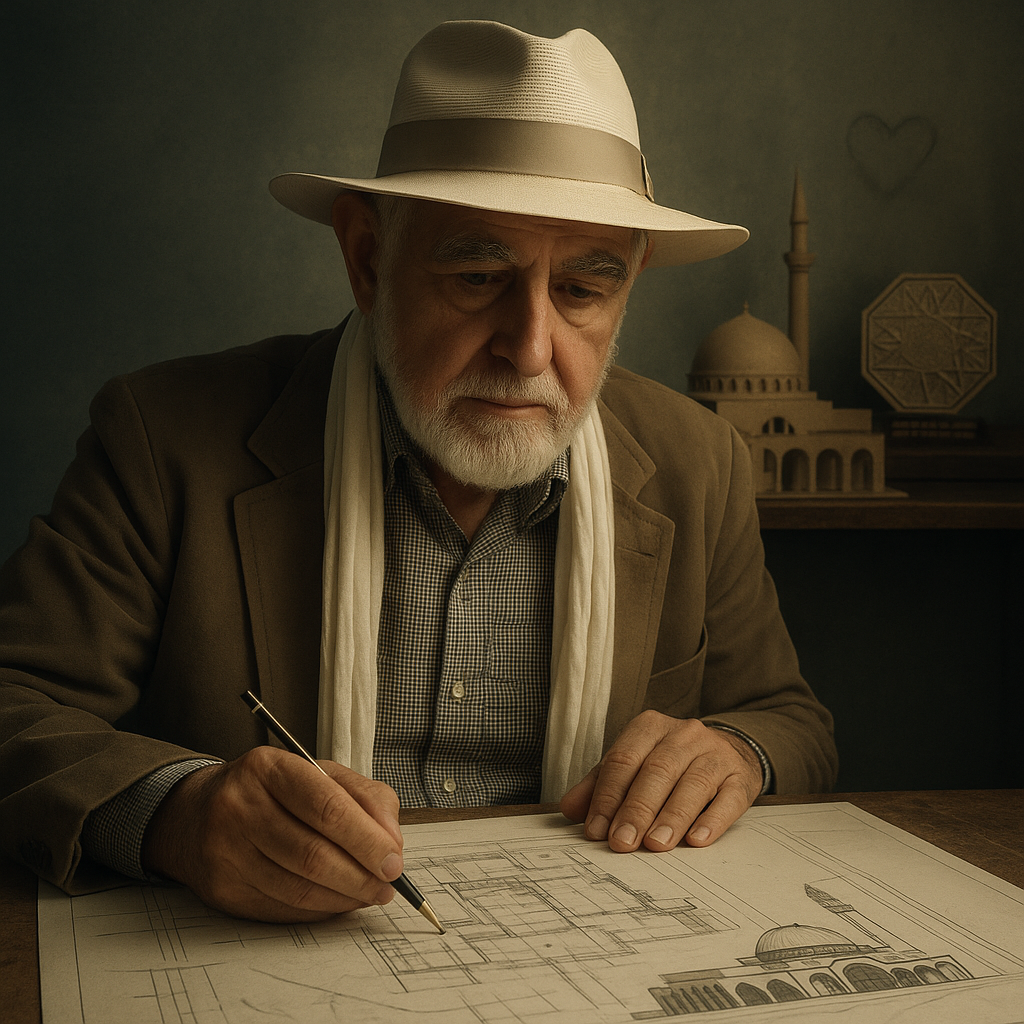
Image: created by AI – does not represent Mr.Karim.

In an era defined by climate crises and technological overload, Dr. Ibrahim Karim, an Egyptian-Swiss architect and founder of BioGeometry, proposes a radical solution rooted in ancient wisdom: harnessing the invisible, harmonizing power of life force energy through geometric design. In a recent interview, Dr. Karim unveiled how this emerging science bridges millennia-old principles with modern innovation to address today’s environmental and health challenges.

The Science of BioGeometry: Harmonizing Energy Through Shape

BioGeometry, a term coined by Dr. Karim, merges “bio” (life) with “geometry” to describe a design language that interacts with life force—an intelligent, holistic energy he believes underpins all natural systems. “Life force is the cradle of creation,” he explains, arguing that modern science’s dismissal of this energy has led to harmful technologies, from electromagnetic radiation to polluting emissions.

Key to BioGeometry is the concept of resonance. By crafting specific geometric shapes—often inspired by nature or ancient sacred sites—Dr. Karim claims these designs can neutralize harmful energies and amplify beneficial ones. For example, small geometric emitters placed in cars or homes purportedly transform electromagnetic fields into “healing cocoons,” akin to Earth’s natural magnetic fields.

From Swiss Valleys to Smart Cities: Proof in Practice

Dr. Karim’s most striking evidence comes from Switzerland, where BioGeometry solutions were applied in regions plagued by health and environmental crises. In the towns of Hemberg and Fischburg, his team reported a 60% reduction in health symptoms—verified by Swiss Parliament doctors—after installing geometric emitters. Migratory birds returned, cows regained fertility, and chronic ailments like headaches and fatigue diminished.

“The government called it the miracle of Hemberg,” Dr. Karim recalls. The solution? Three geometric shapes affixed to mobile communication towers, piggybacking on signals to distribute harmonized energy across the region.

Ancient Civilizations and the Lost Art of Life Force

Dr. Karim draws parallels between BioGeometry and ancient practices. Sacred sites like Egypt’s pyramids or European cathedrals, he argues, were strategically built atop underground water veins and energy grid intersections. These “power spots” emitted life force, fostering health and societal cohesion. “History is the history of power spots” he asserts, lamenting modern cities’ disconnect from these natural grids.

He criticizes theories that ancient Egyptians used pyramids for electricity, insisting their true purpose was life force amplification. “They planted their architecture in nature,” he says, likening ancient structures to living organisms.

A Crossroads for Humanity

Dr. Karim warns that without integrating life force into modern tech, civilization risks collapse. Yet he remains optimistic: BioGeometry’s applications—from wearable “bio-signature” pendants to city planning—could revolutionize industries. His BioSignatures App, launching soon, allows users to print and apply geometric designs for personal energy harmonization.

The Physics of Quality: A New Frontier

Central to Dr. Karim’s work is the “physics of quality,” a framework exploring the 98% of reality beyond sensory perception. He likens life force to a “hidden orchestra” governing biological functions, accessible through resonance. “Your body is run by the universe,” he says, urging a shift from quantitative to qualitative science.

A Call to Reconnect

As climate disasters escalate, Dr. Karim’s message resonates: humanity must realign with Earth’s life force or face expulsion from its “immune system.” His vision? A future where technology and nature coexist through BioGeometry’s principles. “We are cells in Earth’s body,” he concludes. “To survive, we must harmonize—not dominate.”

Dr. Ibrahim Karim’s books, including Hidden Reality: The Physics of Quality and BioGeometry Signatures, are available online. Learn more at https://www.biogeometry.ca/home

This article synthesizes key insights from Dr. Karim’s interview, emphasizing actionable solutions and historical context. For the full discussion, visit YouTube.

Bilim-Teknoloji-Yapay Zeka / Science-Technology-AI içinde yayınlandı | , , , , , , , ile etiketlendi | Yorum bırakın

Distinguishing Intuition from Ego and Embracing Authentic Creativity

Can We Trust Our Feelings and Intuition?

Is This Thought Intuition or Ego? | Eckhart Tolle

Key Subjects Explored

  1. Intuition vs. Ego:
    • Question: How can one differentiate between a persistent thought rooted in intuition versus ego?
    • Answer:
      • Ego-driven thoughts arise from external validation (e.g., “I want to be seen as a writer”) or superficial desires (e.g., the 17-year-old girl aspiring to be a brain surgeon for prestige, not passion).
      • Intuition emerges from a deeper, formless place within. It feels like a quiet, peaceful knowing, often accompanied by a sense that something “wants to be born through you.” Tolle emphasizes that intuition is not tainted by fear, anger, or conditioning.
  2. The Creative Process and Resistance:
    • Question: How to navigate resistance when pursuing creative endeavors like writing a book?
    • Answer:
      • Create space: Dedicate regular, uninterrupted time for creativity, even if progress feels slow. Honor the process by showing up consistently.
      • Resistance as momentum: Resistance often stems from the inertia of habitual life. Persist through it to build creative momentum.
      • Formlessness to form: Creativity begins as inspiration (formlessness) and requires the mind to shape it into tangible work (form).
  3. Trusting Feelings vs. Emotional Reactivity:
    • Question: Can we trust our feelings and intuition?
    • Answer:
      • Acknowledge, don’t blindly trust: Feelings rooted in fear, past conditioning, or misinterpretations (e.g., the woman fearing Tolle might harm her) are unreliable guides.
      • True intuition arises from presence. It carries a quiet strength and clarity, free from nervous energy or negativity.
  4. Non-Reactivity and Presence:
    • Example: Tolle’s story of the woman who initially rejected living with him due to fear. By responding non-reactively (“That’s fine”), he avoided ego-driven conflict.
    • Lesson: Reactivity amplifies problems. Presence allows simplicity and avoids reinforcing the ego’s need to “make others wrong.”
  5. Ego’s Role in Conflict and Storytelling:
    • Question: Why do we often feel “right” while others are “wrong”?
    • Answer:
      • The ego thrives on narratives that reinforce separation and superiority (e.g., complaining about others’ faults).
      • Zen master parable: By refusing to engage in defending himself against false accusations, the master avoided ego-driven drama. The lesson: Detach from stories that fuel conflict.

Practical Takeaways

  • For Creativity:
    • Prioritize consistency over perfection. Even minimal daily progress (e.g., writing three words) builds momentum.
    • Recognize whether your motivation is egoic (external validation) or intuitive (an inner urge to express).
  • For Relationships and Reactivity:
    • Pause before reacting. Ask: Am I adding unnecessary drama to this situation?
    • Avoid amplifying conflicts by retelling stories that paint others as “wrong.”
  • For Trusting Intuition:
    • Notice the quality of your feelings. Intuition feels calm and certain; ego-driven emotions are chaotic or fear-based.
    • Cultivate presence through meditation or mindful observation to access deeper wisdom.

Conclusion

Eckhart Tolle’s insights remind us that authenticity arises when we discern the ego’s chatter from the soul’s whisper. By creating space for creativity, practicing non-reactivity, and grounding ourselves in presence, we align with intuition—the quiet force that guides us toward meaningful action. Whether writing a book, navigating relationships, or facing resistance, the key lies in honoring the formless within and letting it take shape without ego’s interference.

Kişisel Gelişim-Self evolution içinde yayınlandı | , , , , , , , , , ile etiketlendi | Yorum bırakın

Ozan Sağdıç: The photographer’s testimony

Ozan Sağdıç was born in 1934 in Burhaniye Pelitköy. He spent his childhood and early youth in Edremit, and while attending middle school in İzmir, his art and craft teacher was the painter Âbidin Elderoğlu. He went on to study at Kabataş High School in Istanbul as a boarding student, and during the summer vacation of 1953, he acquired his first box camera. He began capturing various scenes of Istanbul, and in 1954, he documented an event when the Bosphorus was covered in ice—his first experience with contemporary photography.

At one point, he worked as an assistant machinist at Lâle Cinema in his hometown Edremit and helped with the layout at the Edremit newspaper published by his older brother. In 1955, after returning to Istanbul, he began working at his first photo studio, Foto Sait. One evening, Mr. Sait introduced him to the board of the Istanbul General Photographers Association, where he was appointed as the secretary. Through this role, he got to know many photographers in Istanbul. Working at the studio of the association’s president, Şevket Tanju, he learned all the intricacies of portrait photography. With a borrowed Rolleiflex camera, he captured beautiful scenes of Istanbul.

In 1956, he caught the attention of the team behind the weekly magazine Hayat. As soon as the magazine started publication, he became one of its first two photo reporters alongside Ara Güler and worked with the Istanbul team until 1960. That year, he was transferred to Hayat magazine’s newly opened Ankara office.

From that point on, he continued his career in journalism and photography in Ankara. There, he began photographing the stage performances of the State Theaters and contributed to their printed publications by designing the first theatre posters with a modern graphic sense. He also created book and publication covers that reflected contemporary graphic trends, and made significant contributions to the archival and promotional publications of the Ministries of Tourism and Culture. In 1968, one of his photos, sent to The British Journal of Photography, was published as the “Photo of the Year.”

Throughout his career, Sağdıç has held around 50 personal exhibitions in Turkey and abroad. His diaporama shows, synchronized with music, have attracted special attention on several occasions. Additionally, he taught photography and art courses during the early years of the Faculty of Communication at Ankara University and the Faculty of Fine Arts at Hacettepe University.

In recognition of his contributions to Turkish photography, he was honored as an honorary member by both AFSAD and BUFSAD, and he was one of the founding members of FSK. Over the years, Sağdıç has served on various committees and advisory boards, including the UNESCO National Commission Culture Committee and the Cultural Ministry’s Art Advisory Board. He has also provided art consultancy to many organizations, such as TSE, the Turkish Cultural Foundation, and TKV. In addition to receiving the title of State Artist in 1998, he has been awarded numerous prizes, including the Art Institution Award in 1985, the Aydın Doğan Award in 2014, the TFSF Artist of the Year for 2020–2021, and the ÇAĞSAV Art Award in 2023.

Ozan Sagdıç exhibition video

A conversation with Ozan Sagdıç

Virtual tour of the exhibition

Sergi-Exhibitions içinde yayınlandı | , , , ile etiketlendi | Yorum bırakın

J.L. Moreno’s Impact on Fritz Perls and Gestalt Therapy

copyright: kikasworld.com

Jacob Levy Moreno (1889–1974), the creator of Psychodrama, had a significant influence on Fritz Perls and the development of Gestalt Therapy. Moreno’s work introduced key concepts related to spontaneity, role-playing, and group dynamics, many of which Perls adapted into Gestalt practice.


1. The Use of Psychodrama & Role-Playing

  • Moreno developed Psychodrama, a method where clients acted out emotions, conflicts, or life situations rather than just talking about them.
  • Perls adopted this experiential, theatrical approach, using techniques like:
    Role reversal (e.g., talking to an empty chair as if it were a person)
    Exaggeration (amplifying body movements and emotions)
    Dialogue techniques (encouraging internal conversations, such as the “topdog-underdog” exercise).
  • This active, expressive approach set Gestalt Therapy apart from traditional psychoanalysis.

2. The “Here and Now” Experience

  • Moreno emphasized immediacy—helping clients experience emotions in the present moment, rather than just analyzing past experiences.
  • This directly influenced Gestalt Therapy’s focus on the “here and now”, where clients are encouraged to experience their feelings fully in the moment, rather than intellectualizing them.

3. Spontaneity and Creativity

  • Moreno believed that spontaneity was key to psychological health, allowing people to break free from rigid patterns.
  • Perls integrated this by using improvisation and spontaneous expression in Gestalt sessions, rather than structured interpretations.
  • The Gestalt therapist, like a director in psychodrama, encourages the client to explore new ways of being rather than staying stuck in old narratives.

4. The Empty Chair Technique

  • Perls’ famous “Empty Chair” technique was inspired by Moreno’s role-playing exercises in Psychodrama.
  • This technique allows clients to:
    ✔ Engage in dialogues with different parts of themselves (e.g., inner conflicts, different perspectives).
    ✔ Confront unfinished business with people from their past.
    ✔ Gain insight through embodied interaction rather than abstract analysis.

5. Group Therapy & Encounter Groups

  • Moreno was a pioneer of group therapy, emphasizing interaction and emotional expression in a social context.
  • Perls later adapted Gestalt group therapy, where clients engage in live, interactive processing rather than passively listening.
  • Both approaches emphasize authenticity, directness, and experiential learning in group settings.

Summary: Moreno’s Influence on Perls

Moreno’s ConceptPerls’ Adaptation in Gestalt Therapy
Psychodrama & role-playingEmpty chair technique, exaggeration
Spontaneity & creativityExperiential, expressive therapy
“Here and Now” focusGestalt’s present-moment awareness
Group TherapyGestalt encounter groups
Embodied emotional expressionBody awareness & integration

Conclusion

Moreno’s theatrical, action-based approach to therapy deeply influenced Perls’ Gestalt Therapy. Perls transformed therapy into an interactive, expressive process, making it more immediate, embodied, and experiential, much like Moreno’s Psychodrama.

Scenario Example of Moreno’s Influence in Gestalt Therapy

Let’s look at a practical therapy session where Moreno’s role-playing and psychodrama techniques are used in Gestalt Therapy.

Scenario: A Client with Unresolved Anger Toward Their Father

  • The client, Anna, has built-up resentment toward her father, who was emotionally distant during her childhood.
  • She struggles with expressing her feelings and often avoids confrontation.

Step 1: The Empty Chair Technique (Inspired by Psychodrama Role-Playing)

  • The therapist places an empty chair in front of Anna.
  • Anna is asked to imagine her father sitting in the chair and to speak directly to him.

Step 2: Encouraging Spontaneity & Emotional Expression

  • The therapist encourages Anna to speak freely and express her emotions as if her father were actually there.
  • Anna hesitates, but then starts expressing anger, disappointment, and sadness.
  • As she speaks, the therapist asks her to exaggerate her emotions and gestures (another technique borrowed from Moreno).
  • Anna’s body language changes—she clenches her fists, raises her voice, and starts to feel her emotions more intensely.

Step 3: Role Reversal (Directly from Psychodrama)

  • The therapist asks Anna to switch seats and take on her father’s role.
  • She now has to respond as her father would.
  • This gives Anna a new perspective and allows her to see possible reasons behind her father’s emotional distance.

Step 4: Integration and Awareness

  • After switching roles a few times, Anna realizes that her father wasn’t intentionally neglecting her, but was emotionally shut down himself.
  • This awareness leads to emotional relief and self-acceptance.
  • The therapist helps Anna integrate her insights, shifting her focus from resentment to self-compassion.

Why This Works (The Moreno-Gestalt Connection)

TechniqueFrom Moreno’s PsychodramaUsed in Gestalt Therapy
Empty ChairUsed in role-playing exercisesHelps resolve unfinished business
Role ReversalClients play different rolesClients embody different perspectives
ExaggerationEncourages emotional expressionEnhances awareness of feelings
Group or Individual DramaUsed to explore personal conflictsHelps clients relive experiences in therapy

Conclusion

By acting out emotions rather than just talking about them, clients like Anna can gain deeper insights, release emotions, and move toward healing. Moreno’s psychodrama techniques made Gestalt Therapy more dynamic, expressive, and immediate, allowing clients to experience deep emotional breakthroughs.

gestalt içinde yayınlandı | , , , , , , , , , , , , , , , ile etiketlendi | Yorum bırakın

Exploring Polarities in Ourselves and Our Relationships

Here’s a 30-minute workshop idea for your Gestalt therapy group. It’s fun, creative, insightful, and encourages collaboration in pairs. The theme will be “Exploring Polarities in Ourselves and Our Relationships.”


Workshop Outline: Exploring Polarities

Objective:

Participants will explore polarities within themselves and their relationships, fostering self-awareness, creativity, and connection.

Preparation:

  1. Divide the group into breakout rooms, with 2 participants in each room.
  2. Each pair will need a piece of paper and a pen (or a virtual whiteboard in Zoom for drawing).

Workshop Flow:

1. Introduction (5 minutes)

  • Briefly explain the concept of polarities in Gestalt therapy (e.g., “light vs. shadow,” “selfishness vs. selflessness,” “openness vs. guardedness”).
  • Share that the aim is to creatively explore and embody these polarities through a simple exercise.
  • Explain the structure: Participants will work in pairs, share insights, and return to the main room to discuss experiences.

2. Breakout Activity Instructions (2 minutes)

  • Assign a polarity to each pair (e.g., “control vs. freedom,” “giving vs. receiving”). If you’d like, let them choose from a pre-prepared list of polarities.
  • Each participant in the pair takes turns:
    • Person A will embody/role-play one end of the polarity (e.g., “control”).
    • Person B will embody/role-play the opposite end (e.g., “freedom”).
    • They will explore the following:
      • How does it feel to express this polarity?
      • How does it feel to interact with the opposite polarity?

3. Breakout Room Activity (15 minutes)

  • Pairs work together:
    1. Each person gets 3 minutes to role-play their assigned polarity.
    2. Afterward, they spend 4 minutes reflecting together:
      • What did they notice about their feelings?
      • How did they perceive the other’s role?
      • Where do these polarities show up in their own lives?

Encourage them to have fun with this exercise! They can draw, dramatize, or even use metaphors to express the polarities.


4. Group Debrief (8 minutes)

  • Bring everyone back to the main room.
  • Ask a few open-ended questions:
    • “What surprised you about this exercise?”
    • “What did you learn about your own relationship to polarities?”
    • “What creative approaches did you discover?”
  • Allow participants to share insights, but keep the pace brisk so everyone has a chance to speak.

Why This Workshop Works:

  • Fun: Role-playing encourages playfulness and creativity.
  • Creative: Participants can express polarities in unique, personal ways.
  • Insightful: The exercise naturally evokes self-awareness and deeper understanding of relational dynamics.

Here’s a list of engaging polarities you can use for your workshop:

  1. Control vs. Freedom
  2. Giving vs. Receiving
  3. Openness vs. Guardedness
  4. Logic vs. Intuition
  5. Strength vs. Vulnerability
  6. Patience vs. Urgency
  7. Action vs. Rest
  8. Selfishness vs. Selflessness
  9. Chaos vs. Order
  10. Past vs. Future
  11. Dependence vs. Independence
  12. Attachment vs. Detachment
  13. Silence vs. Expression
  14. Trust vs. Doubt
  15. Acceptance vs. Change
  16. Fear vs. Courage
  17. Hope vs. Despair
  18. Aloneness vs. Togetherness
  19. Familiarity vs. Novelty
  20. Harmony vs. Conflict
gestalt içinde yayınlandı | , , , , , ile etiketlendi | Yorum bırakın

“I’m Sorry on Your Behalf”: Inside Japan’s Apology Agencies

Intro: Imagine hurting someone’s feelings, missing a deadline, or breaking up with someone—and instead of crafting an apology, you hire someone to do it for you. In Japan, that’s not just an intriguing concept, it’s a business. Apology agencies, known as “shazai daikou” (謝罪代行), offer a unique service: they deliver apologies on behalf of clients, whether face-to-face, by phone, or even by letter. But what does this say about social norms, shame, and emotional labor in modern Japan?


1. The Cultural Context of Apology in Japan In Japanese society, harmony and respect are pillars of social interaction. The act of apologizing is not merely about admitting fault—it’s a ritual that restores balance and maintains face. The phrase “sumimasen” (すみません) is used frequently and fluidly to express regret, gratitude, or humility.

This deeply rooted culture of apology can also create immense pressure. People may feel unable to apologize due to shame, fear of confrontation, or simply being overwhelmed. That’s where apology agencies come in.


2. What Do Apology Agencies Do? These agencies act as emotional intermediaries. Services range from formal in-person apologies (complete with bows and suits) to letters that convey remorse with carefully crafted wording. Some even offer crying actors to show the depth of regret. Yes—there are professional apologists who can cry on command.

Situations vary:

  • A man hiring an agency to apologize to his ex-girlfriend for cheating.
  • A company using an agency to deliver a public apology to disgruntled customers.
  • A student who plagiarized an essay and wants someone to apologize to the professor.

3. Why Would Someone Hire a Stranger to Apologize? The reasons are surprisingly relatable:

  • Avoiding shame: Especially in cases involving deep embarrassment or personal failure.
  • Lack of skill: Some simply don’t know how to apologize effectively.
  • Professional polish: A carefully staged apology might carry more weight.
  • Conflict avoidance: When emotions run high, a neutral third party can prevent escalation.

4. Ethics and Emotional Authenticity But doesn’t this make apologies less sincere? Critics argue that outsourcing regret commodifies a deeply personal emotion. Others see it as a pragmatic solution in a high-context culture where the form can sometimes matter as much as the feeling.

Can a stranger really capture the pain behind an apology? Or is sincerity in Japan more about gesture and effort than raw emotion?


5. What This Tells Us About Modern Life Apology agencies offer a mirror to modern pressures—emotional outsourcing, growing loneliness, and the clash between tradition and efficiency. While it may seem bizarre from a Western perspective, it opens up broader questions about how societies manage conflict, shame, and reconciliation.


6. How Do Other Cultures Apologize? Apology is universal—but how it’s expressed varies dramatically across cultures. While Japan’s apology culture is formal and ritualized, other nations have their own fascinating approaches:

  • South Korea
    Much like Japan, apologies in Korea are crucial to social harmony. A sincere bow and the word “joesonghamnida” (조성합니다) are standard. Public apologies from celebrities or corporations are often televised, with kneeling and tears expected.
  • Germany
    Germans value directness. Apologies are straightforward, honest, and responsibility-focused. “Es tut mir leid” means “I am sorry,” often paired with an explanation or solution.
  • United States
    Americans apologize often—even for things they aren’t responsible for. “Sorry” can mean sympathy more than guilt. Public apologies are frequently shaped by legal concerns.
  • United Kingdom
    British people are famously apologetic. “Sorry” is used to maintain politeness, sometimes even when they are not at fault.
  • China
    In China, saving face is critical. Apologies may be avoided in public to prevent embarrassment, but gifts or symbolic acts can express remorse effectively.
  • New Zealand & Maori Culture
    The Maori concept of muru involves community rituals to restore harmony. Forgiveness is about healing the group, not just the individuals involved.
  • Rwanda
    Post-genocide Rwanda used traditional Gacaca courts, where public apologies and reintegration efforts were part of a national healing process.

Final Thought: Every culture has its own rhythm for reconciliation. Whether through a bow, a legal statement, a quiet word, or a community ritual, the essence is the same: restoring human connection. And sometimes, as Japan shows us, even that can be outsourced—but never entirely replaced.

Uncategorized içinde yayınlandı | Yorum bırakın

Exploring the Persona, Self, Archetypes, and the Unconscious

Carl Jung 1957 Restored Interview – Intuition, Individuality & Healing | Part 1

Carl Jung 1957 Restored Interview – The Self, The Unconscious, Psychosomatics & The U.S. | Part 2

1. The Persona: Social Mask vs. True Self

Question: How does Jung define the “Persona”?
Answer:

  • The Persona is a social façade shaped by societal demands and personal compromises (e.g., a doctor’s bedside manner).
  • It is distinct from the “real personality.” Confusing the two leads to inner conflict and neurosis.
  • Jung warns that unconscious identification with the Persona creates a “Jekyll and Hyde” duality, causing psychological strain.

2. Ego, Self, and the Collective Unconscious

Question: What differentiates the Ego from the Self?
Answer:

  • Ego: The conscious, empirical self (“I myself”).
  • Self: The totality of the personality, including unconscious elements. It transcends the Ego and integrates archetypal patterns.
  • Collective Unconscious: Contains universal archetypes (e.g., the Hero, Anima/Animus) shared across cultures. Jung cites examples like the “snake in the abdomen” dream, linking it to the Kundalini serpent in Eastern philosophy.

3. Introversion, Extroversion, and Psychological Functions

Question: How do introversion/extroversion and the four functions (thinking, feeling, sensation, intuition) shape personality?
Answer:

  • Introverts focus on inner subjective experiences; Extroverts prioritize external stimuli. Most people are a mix.
  • Four Functions:
    • Sensation: Perceives reality.
    • Thinking: Analyzes logically.
    • Feeling: Evaluates emotional value.
    • Intuition: Accesses unconscious insights (e.g., predicting a bird’s resurfacing in water).
  • Intuition types (e.g., gamblers, doctors) rely on “hunches” from subliminal cues.

4. Synchronicity and Rhine’s Experiments

Question: How does synchronicity relate to meaningful coincidences?
Answer:

  • Synchronicity describes non-causal, meaningful connections (e.g., dreaming of a red car before seeing one).
  • Jung cites J.B. Rhine’s statistical work on ESP as evidence that such phenomena surpass chance.
  • Critiques reductionist labels like “telepathy,” emphasizing the relativity of time and space through the psyche.

5. Psychic Energy and Critique of Freud

Question: How does Jung’s view of libido differ from Freud’s?
Answer:

  • Freud’s “libido” narrowly centers on sexuality. Jung redefines it as general psychic energy driving all instincts (e.g., creativity, aggression).
  • Uses the metaphor of water flowing downhill (entropy) to explain energy’s directional flow toward balance.

6. Psychosomatic Medicine and the Mind-Body Link

Question: Can psychological factors cause physical illness?
Answer:

  • Jung highlights cases where repressed emotions manifest as ailments (e.g., tuberculosis from shallow breathing due to unresolved complexes).
  • Critiques the idea that patients “choose” symptoms; instead, unconscious dynamics happen to them.
  • Supports research linking stress to ulcers, cancer, and autoimmune diseases.

7. The Mandala and Individuation

Question: What role does the Mandala play in therapy?
Answer:

  • The Mandala (a circle within a square) symbolizes wholeness and the Self.
  • Appears spontaneously in dreams or art during psychological chaos, offering a compensatory image of order.
  • Individuation: The lifelong process of integrating conscious and unconscious elements to achieve Self-realization.

8. Historical Insights and Cultural Critique

Key Points:

  • Nazi Germany: Jung predicted its rise through patients’ archetypal dreams of “heroic saviors” like Hitler.
  • U.S. Psychology: Criticizes America’s extraverted bias and lag in understanding the unconscious.
  • Toynbee’s Civilizations: Links historical cycles to archetypal patterns (e.g., the Cold War as a clash of “red vs. white” alchemical symbolism).

9. Projective Tests and the Unconscious

Question: How do tests like Rorschach reveal hidden complexes?
Answer:

  • Word Association Tests: Uncover repressed emotions (e.g., solving a murder via unconscious reactions).
  • Rorschach: Demonstrates how projections reflect inner conflicts. Jung stresses their didactic value for training psychologists.

10. Final Reflections on Psychology’s Future

Jung laments modern psychology’s neglect of the unconscious and mythic dimensions. He urges integrating historical, cultural, and biological perspectives to grasp the psyche’s full complexity. His parting advice: “The world hangs on a thin thread—the psyche of man.”


Conclusion: This interview underscores Jung’s enduring relevance, bridging individual therapy with universal archetypes. His insights challenge us to explore the depths of the unconscious, both personal and collective, as a path to healing and wholeness.

Psikoloji / Psychology içinde yayınlandı | , , , , , , , , , , , , , , , , ile etiketlendi | Yorum bırakın

Two Worlds: The As-Is vs. The As-If

  • Image created with AI by kikasworld.com

In 1991, a then 82-year-old Douglas Harding gave a powerful and humorous talk in Melbourne, Australia. Best known as the author of On Having No Head: Zen and the Rediscovery of the Obvious, Harding offered not doctrines or beliefs, but experiments—simple, firsthand inquiries that help individuals directly perceive their true nature.

His central premise? You are not what you look like.


Two Worlds: The As-Is vs. The As-If

Harding’s life work revolves around distinguishing between two realities:

  • The As-Is World: the world as directly experienced, immediate, unmediated, “woven of blessings”.
  • The As-If World: the socially constructed world shaped by language, convention, and external validation.

Most people, he says, live and die entirely within the “as-if” world—believing they are who others say they are, seeing themselves through the eyes of mirrors, photographs, and social roles. But through “headless” experiments, we can return to the as-is world, seeing the world not through thought or belief, but through direct observation.


“On Having No Head”: Seeing from Zero Distance

In his hallmark experiment, Harding invites us to look at what we’re looking out of. Do we really see two eyes in a face when we observe the world? Or do we see a seamless, frameless field of vision? Inwardly, we discover not a head, but an open, spacious awareness.

“What you look like to others, you are not. What you look out of, is who you really are.”

In a playful but profound way, Harding suggests we are transparent, spacious, awake capacity for the world.


The Experiments: First-Person Science

Throughout the talk, Harding insists we don’t believe him. Instead, we must test his claims through direct inquiry.

Examples include:

  • Pointing experiments: Point at your feet, then your chest, then your face—what do you see? At your feet and chest, you see something. When you point to your own face, from your own perspective, what do you see? Nothing but space—awareness.
  • Mirror experiments: The person in the mirror is a reflection, a role, a mask. But the viewer—the experiencer—is not a thing at all.

These are not mystical claims, he asserts—they are literal, physical, and present.


Theological Echoes: Mysticism Without the Myths

Harding connects his discoveries with the core mystical insights at the heart of the world’s great religions:

  • Christian mysticism speaks of “Christ in you, the hope of glory.”
  • The Upanishads declare “Tat Tvam Asi”—you are That.
  • Islamic Sufism claims, “He is closer to you than your jugular vein.”

Harding calls this the most shocking and radical claim of all—that our true identity is not a product of the world, but its origin. “The One you really are,” he says, “is nearer than near, and is eternal.”


Practical Implications: Love, Energy, and Trust

This isn’t just philosophy. Harding argues that seeing through the illusion of separation has real-life consequences:

  • Love becomes possible: True love isn’t confrontation between egos, but spacious presence meeting spacious presence.
  • Energy increases: Maintaining a false self-image is exhausting. Seeing through it, we reclaim vitality.
  • Inner peace: The “meatball” of the head is the source of stress. The headless reality is open, still, peaceful.

“We are not facing each other—we are space for each other.”

Harding’s friend Chris, present at the talk, echoes this: “There is no distance. There is no separation. And it frightens me. But it’s true.”


Who Was Douglas Harding?

Born in 1909 in Suffolk, England, Harding was raised in a strict Christian sect. In his 20s, he left that tradition and began a lifelong philosophical and spiritual quest. Trained as an architect, he later taught comparative religion at Cambridge, and wrote several books and gave workshops across Europe, Asia, and the United States.

His main books include:

More titles and details are available via the official Headless Way website.


Those Continuing the Path Today

Harding’s teachings didn’t die with him in 2007. His work lives on through an international community of “headless” explorers and teachers. Some key figures include:

  • Richard Lang – A close friend and collaborator of Harding’s, who continues to lead workshops and maintain the Headless Way website.
  • Rupert Spira – Though not a direct student, his non-dual teachings on awareness as our true identity echo Harding’s insights.
  • Tony Parsons – His uncompromising view of non-duality aligns with Harding’s view of the illusory personal self.
  • Sam Harris – While from a secular, neuroscientific background, his guided meditations often lead people to a similar realization of headlessness.

Conclusion: The One and Only Authority

Harding’s message is both radical and humble. He doesn’t claim to be a guru. He insists you don’t believe him. He simply invites you to look for yourself.

“You are the sole and final authority on what it’s like to be you.”

To Douglas Harding, spirituality isn’t about seeking a new self. It’s about seeing what’s always been here—this vast, open, empty presence.

A presence with no head.
A presence that can never perish.
A presence that is love itself.

Kişisel Gelişim-Self evolution içinde yayınlandı | , , , , , , , , , , , , , , , , , ile etiketlendi | Yorum bırakın

Carl Jung on Intuition: Key Insights from a Revealing Conversation

The following article distills a profound conversation with Carl Jung, focusing on his exploration of intuition, its mechanisms, and its manifestations in human behavior. Jung’s insights are illustrated through vivid anecdotes, theoretical distinctions, and connections to broader psychological and scientific inquiries.


1. Defining Intuition: Perception via the Unconscious

Subject: The nature and definition of intuition.
Jung’s Explanation:
Intuition, according to Jung, is a form of perception mediated by the unconscious. Unlike sensory perception, which relies on direct observation, intuition operates through “intermediate links”—subtle, unconscious associations that yield insights without conscious reasoning. Jung likened it to a “chain of associations” where only the final result surfaces in awareness.

“Intuition is a perception by ways or means of the unconscious. That is as near as I can get.”

Real-Life Example:
Jung recounted a story of two patients—a sensation-type man and an intuitive-type woman—who competed to spot diving birds on Lake Zurich. Despite the man’s attention to sensory details, the woman consistently predicted the birds’ resurfacing points through hunches, demonstrating intuition’s uncanny accuracy.


2. Intuitive Types: Extroverted vs. Introverted

Subject: Differences between intuitive-extroverts and intuitive-introverts.
Key Questions:

  • How do intuitive-extroverts differ from intuitive-introverts?
  • What are their real-world manifestations?

Jung’s Answers:

  • Intuitive-Extroverts: These individuals focus on external possibilities. Examples include bankers, gamblers, and hunters who rely on hunches to navigate tangible opportunities or risks.
  • Intuitive-Introverts: They perceive “subjective factors” or inner psychic realities. Their insights often involve symbolic or archetypal imagery but are harder to articulate. Jung shared the case of a young woman who envisioned a “golden snake” emerging from her body during therapy—a metaphor for her psychological transformation.

“The introverted intuitive has a very difficult life… [their experiences] are utterly strange to the ordinary individual.”


3. Intuition in Modern and Primitive Contexts

Subject: The role of intuition across environments.
Jung’s Observations:

  • Primitive Settings: In unpredictable environments (e.g., uncharted forests), intuition becomes vital for survival. Hunches about favorable locations or unseen dangers guide decisions.
  • Modern Life: Even in “safe” urban settings, intuition persists. For example, drivers might sense impending accidents through subliminal cues (e.g., patterns of pedestrian behavior).

Case Study:
Jung described a woman who unknowingly lived in a brothel yet remained oblivious to her surroundings. While she lacked sensory awareness, her intuitive hunches about her therapy’s timeline (e.g., predicting 10 sessions) proved eerily accurate.


4. Intuition and Science: Clashing Perspectives

Subject: The tension between intuition and empirical science.
Key Questions:

  • Can intuition align with scientific frameworks like J.B. Rhine’s ESP research?
  • How do statistical methods (e.g., Rhine’s experiments) validate intuitive phenomena?

Jung’s Stance:
Jung acknowledged overlaps between intuition and extrasensory perception (ESP), noting that Rhine’s statistical work demonstrated phenomena “beyond chance.” However, he criticized terms like “telepathy” as meaningless labels, emphasizing the need to view intuition as a relativization of time and space through the psyche.

“Rhine proves [intuition] is statistically graspable… a relativation of time and space through the psyche. That’s the fact.”


5. Practical Implications of Intuition

Subject: Intuition’s value in professions and daily life.
Jung’s Examples:

  • Doctors: Intuition aids in diagnosing hidden complications.
  • Financial Experts: Bankers and investors rely on hunches to navigate volatile markets.
  • Everyday Decisions: Subtle warnings (e.g., unease while driving) prevent mishaps.

Takeaway:
While modern society undervalues intuition compared to sensory data, Jung argued that it remains a critical adaptive tool, particularly in professions requiring foresight.


Conclusion: Embracing the “Unseen”

Jung’s dialogue underscores intuition as a bridge between conscious reasoning and unconscious wisdom. Whether through a gambler’s hunch, a doctor’s gut feeling, or an introvert’s inner vision, intuition transcends logic, offering insights that shape human survival and creativity. As Jung concluded, dismissing intuition risks ignoring a fundamental dimension of the psyche—one that science is only beginning to quantify.

“The psychologist should know of such things. You see?”

Psikoloji / Psychology içinde yayınlandı | , , , , , , , , , , , , ile etiketlendi | Yorum bırakın

Body awareness in daily life

Integrating movement into daily life, especially through the lens of Gestalt therapy and body awareness, can help individuals reconnect with their physical selves, process emotions, and shift out of trauma-related “freeze” states (as described by Bessel van der Kolk). Here’s a structured approach:


1. Integrate Movement into Daily Routines

  • Micro-movements: Start small. Stretch while waiting for coffee, shift your weight while standing, or roll your shoulders during work breaks. These subtle actions disrupt stagnation and signal safety to the nervous system.
  • Mindful transitions: Use routine moments (e.g., walking to the bathroom, climbing stairs) to notice bodily sensations—the pressure of your feet on the ground, the rhythm of your breath.
  • Embodied rituals: Pair activities with movement, like a morning “body wake-up” (stretching arms overhead, shaking out limbs) or an evening wind-down (gentle yoga or swaying).

2. Gestalt Therapy & Body Awareness

Gestalt emphasizes present-moment awareness and the mind-body connection. Practices include:

  • Body scanning: Pause to notice physical sensations without judgment. Ask: “What do I feel in my body right now? Where is tension or ease?”
  • Grounding exercises: Stand barefoot, feel the floor, and rock gently side-to-side. Verbally acknowledge sensations: “I feel my feet rooted; my breath is slow.”
  • Amplification: If you notice a gesture (e.g., clenched fists), exaggerate it slightly to explore the emotion behind it. “What does this movement want to express?”
  • Empty chair technique: Physically move while dialoguing with an emotion or person (e.g., stand to express anger, sit to receive compassion).

3. Overcoming Freeze Mode

Freeze is a survival response (parasympathetic shutdown). To gently “thaw”:

  • Reconnect with sensation:
    • Tap or rub your arms/legs to reignite proprioception.
    • Hold a warm mug, feel textures, or splash cold water on your face.
  • Breath-led movement:
    • Inhale while raising your arms, exhale as you lower them. Sync breath with motion to bridge mind and body.
    • Try “sigh and shake”: Exhale deeply with a sigh, then gently shake out limbs (releases tension).
  • Rhythmic motion:
    • Rock in a chair, sway to music, or walk rhythmically. Repetition calms the nervous system.
  • Playful movement:
    • Dance, skip, or jump—activities that bypass the “thinking brain” and spark spontaneity.

4. Practical Steps for Integration

  • Trauma-informed practices: Yoga, Tai Chi, or Qigong combine mindful movement with breathwork, fostering safety and embodiment.
  • Journaling: After movement, write down sensations, emotions, or images that arose. Gestalt encourages “owning” fragmented experiences.
  • Community & creativity: Join a dance class, hike with others, or engage in expressive arts (e.g., clay work, drumming) to reconnect socially and somatically.
  • Professional support: Therapies like Somatic Experiencing or Sensorimotor Psychotherapy directly address freeze states with guided body awareness.

Key Gestalt Principle: “Here and Now”

Movement becomes healing when paired with curiosity about the present moment. Instead of forcing change, ask:

  • “What is my body needing to move toward (or away from) right now?”
  • “How can I honor this sensation without judgment?”

By merging movement with mindful body awareness, you cultivate agency, safety, and aliveness—countering the dissociation of freeze. Start gently, celebrate small shifts, and prioritize self-compassion.

gestalt içinde yayınlandı | , , , , , , , , , , , , , , , , ile etiketlendi | Yorum bırakın