
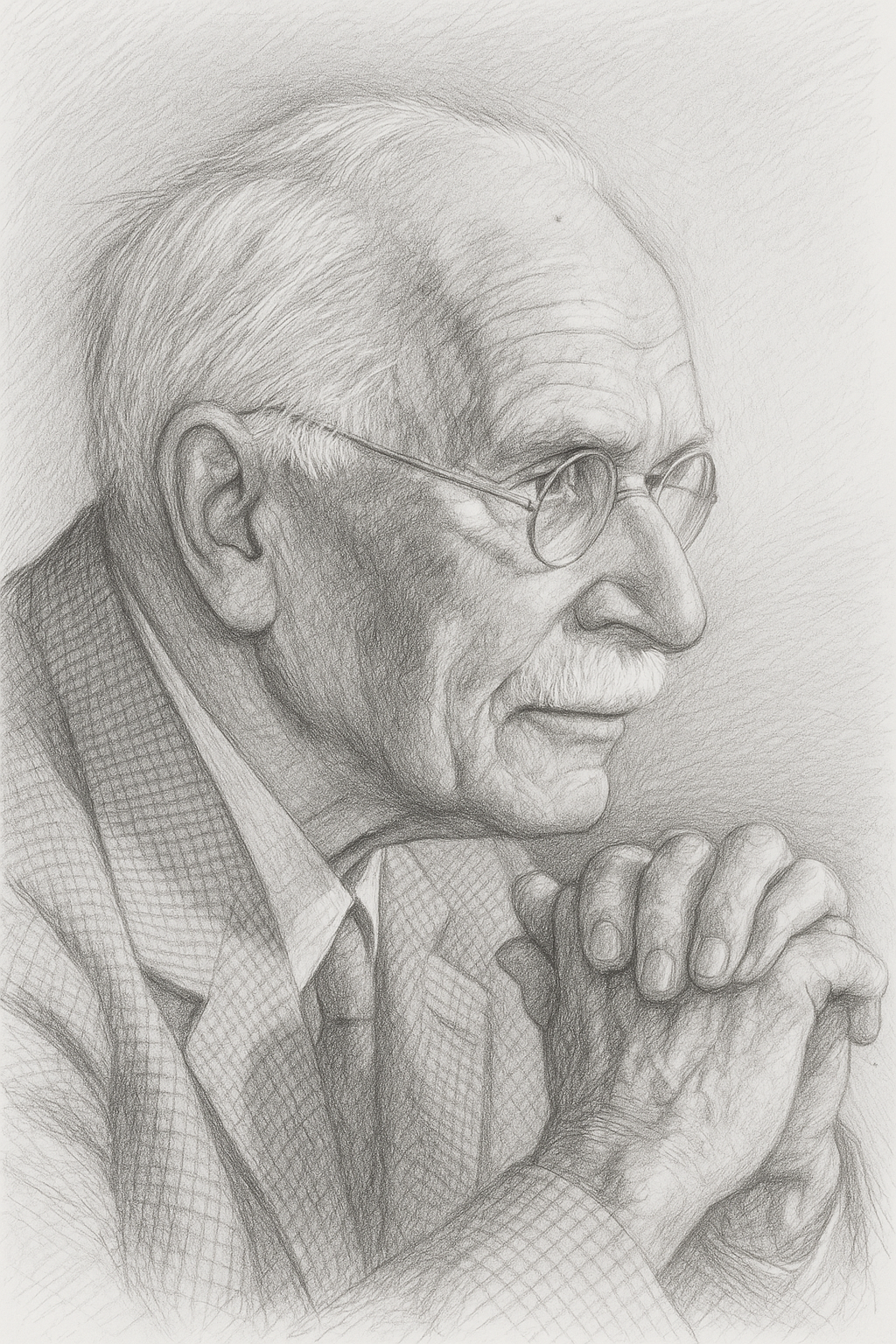
“No matter how isolated you are and how lonely you feel, if you do your work truly and conscientiously, unknown friends will come and seek you.” —Carl Jung
Introduction: The Lonely Path to Unexpected Companionship
We’ve all felt loneliness—the artist in their studio, the writer at their desk, the scientist in their lab. Yet Carl Jung’s alchemist offers a paradoxical comfort: isolation paired with sincere work becomes a magnet for connection. This blog explores Jung’s wisdom through psychology, alchemy, and nature, revealing how dedication to our true path summons unseen allies.
1. Jung’s Psychology: Individuation and the Collective Unconscious
Individuation: Jung’s concept of becoming our authentic selves is a journey inward. Like the alchemist’s disciple, we confront shadows (the nigredo phase) to emerge whole. This authenticity resonates with others, drawing them unconsciously.
Synchronicity: Jung coined this term for meaningful coincidences. When aligned with our purpose, the universe conspires—a chance meeting, an unexpected opportunity—mirroring the “unknown friends” who appear.
Collective Unconscious: Shared archetypes bind humanity. By honoring our true work, we tap into this universal psyche, attracting those who resonate with our essence.
Example: A writer’s vulnerable memoir sparks a global community, strangers united by shared struggles.
2. Alchemy as Metaphor: Turning Isolation into Gold
Alchemy transcends lead-to-gold; it’s soul-work. The disciple’s journey mirrors alchemical stages:
- Nigredo (darkness): Loneliness and self-doubt.
- Albedo (purification): Commitment to authentic work.
- Rubedo (fulfillment): The “inner gold” of self-realization attracts kindred spirits.
Jung saw alchemy as psychological transformation. By persisting in our “laboratory” (craft), we emit a frequency that draws others.
Example: An entrepreneur’s passion project, initially overlooked, gradually attracts investors and collaborators.
3. Universal Forces and Nature’s Wisdom
Nature thrives on symbiosis. A lone tree’s roots foster fungal networks (the “Wood Wide Web”), nourishing the forest. Similarly, our focused energy creates ripples in the human ecosystem.
Cycles and Seasons: Winter’s isolation precedes spring’s bloom. Trusting nature’s timing, we understand that periods of solitude seed future connections.
Example: A conservationist’s decade-long reforestation effort inspires a volunteer movement.
4. Psychological Echoes: Flow, Vulnerability, and the Magnetism of Authenticity
The alchemist’s promise—that authentic work attracts connection—finds resonance in modern psychology. Below, we explore theories that explain why dedication to purpose acts as a beacon for “unknown friends,” alongside real-life examples.
Expanded Psychological Frameworks
- Flow (Mihaly Csikszentmihalyi)
- Concept: Immersive engagement in meaningful tasks creates a state of “flow,” where time dissolves and creativity thrives. This joy radiates outward, magnetizing others.
- Example: A musician loses herself in composing a symphony, later discovering a fanbase moved by her raw emotion.
- Learn More: Csikszentmihalyi’s TED Talk on Flow.
- Vulnerability (Brené Brown)
- Concept: Brown’s research shows that courageously embracing imperfection fosters trust and belonging. Authenticity dismantles walls, inviting others in.
- Example: A CEO shares their mental health struggles in a TED Talk, sparking a company-wide culture of openness.
- Learn More: Brené Brown’s The Power of Vulnerability.
- Self-Actualization (Abraham Maslow)
- Concept: At the peak of Maslow’s hierarchy, self-actualized individuals live authentically, inspiring others through their alignment with purpose.
- Example: Malala Yousafzai’s unwavering advocacy for education galvanized a global movement.
- Learn More: Maslow’s Hierarchy of Needs.
- Logotherapy (Viktor Frankl)
- Concept: Frankl’s belief that finding meaning in suffering transforms isolation into connection. Purposeful work becomes a lifeline for others.
- Example: Holocaust survivors’ memoirs (e.g., Man’s Search for Meaning) uniting readers across generations.
- Learn More: Viktor Frankl Institute.
- Self-Efficacy (Albert Bandura)
- Concept: Belief in one’s ability to succeed creates a ripple effect, empowering others to take action.
- Example: Greta Thunberg’s climate strikes inspiring millions of young activists.
- Learn More: Bandura’s Self-Efficacy Theory.
- Productive Love (Erich Fromm)
- Concept: Fromm’s idea that creativity and care—expressed through work—forge bonds that transcend loneliness.
- Example: Mr. Rogers’ Neighborhood TV show, built on empathy, still unites audiences decades later.
- Learn More: Erich Fromm’s The Art of Loving.
- Unconditional Positive Regard (Carl Rogers)
- Concept: Creating a nonjudgmental space for growth invites others to show up authentically.
- Example: A therapist’s podcast on radical acceptance spawning a supportive listener community.
- Learn More: Carl Rogers’ Client-Centered Therapy.
Real-Life “Unknown Friends” Stories (With Reference Links)
Each story underscores that “unknown friends” are not just people—they’re opportunities, serendipities, and renewed purpose.
- The Writer’s Memoir
- Tara Westover’s Educated—a solitary journey of self-education—resonated with millions battling familial and societal constraints.
- Reference: Tara Westover’s Educated.
- The Entrepreneur’s Project
- Elon Musk’s early SpaceX failures attracted engineers who shared his vision, transforming isolation into collaboration.
- Reference: SpaceX’s Founding Story.
- The Conservationist’s Reforestation
- Wangari Maathai’s Green Belt Movement began with planting trees alone; today, it’s a global network of eco-activists.
- Reference: The Green Belt Movement.
- The Teacher’s Innovation
- Sal Khan’s solo YouTube tutorials evolved into Khan Academy, a free education platform used by 100+ million learners.
- Reference: Khan Academy’s Origin Story.
- The Caregiver’s Quiet Impact
- Mother Teresa’s small Calcutta mission grew into an international order of compassion.
- Reference: Missionaries of Charity.
How to Apply These Insights
- Journal Prompt: What work makes you lose track of time? How might sharing it—even quietly—invite connection?
- Action Step: Start a passion project blog, art Instagram, or local initiative. Trust that consistency, not virality, builds community.
 Kika's world