
Can We Trust Our Feelings and Intuition?
Is This Thought Intuition or Ego? | Eckhart Tolle
Key Subjects Explored
- Intuition vs. Ego:
- Question: How can one differentiate between a persistent thought rooted in intuition versus ego?
- Answer:
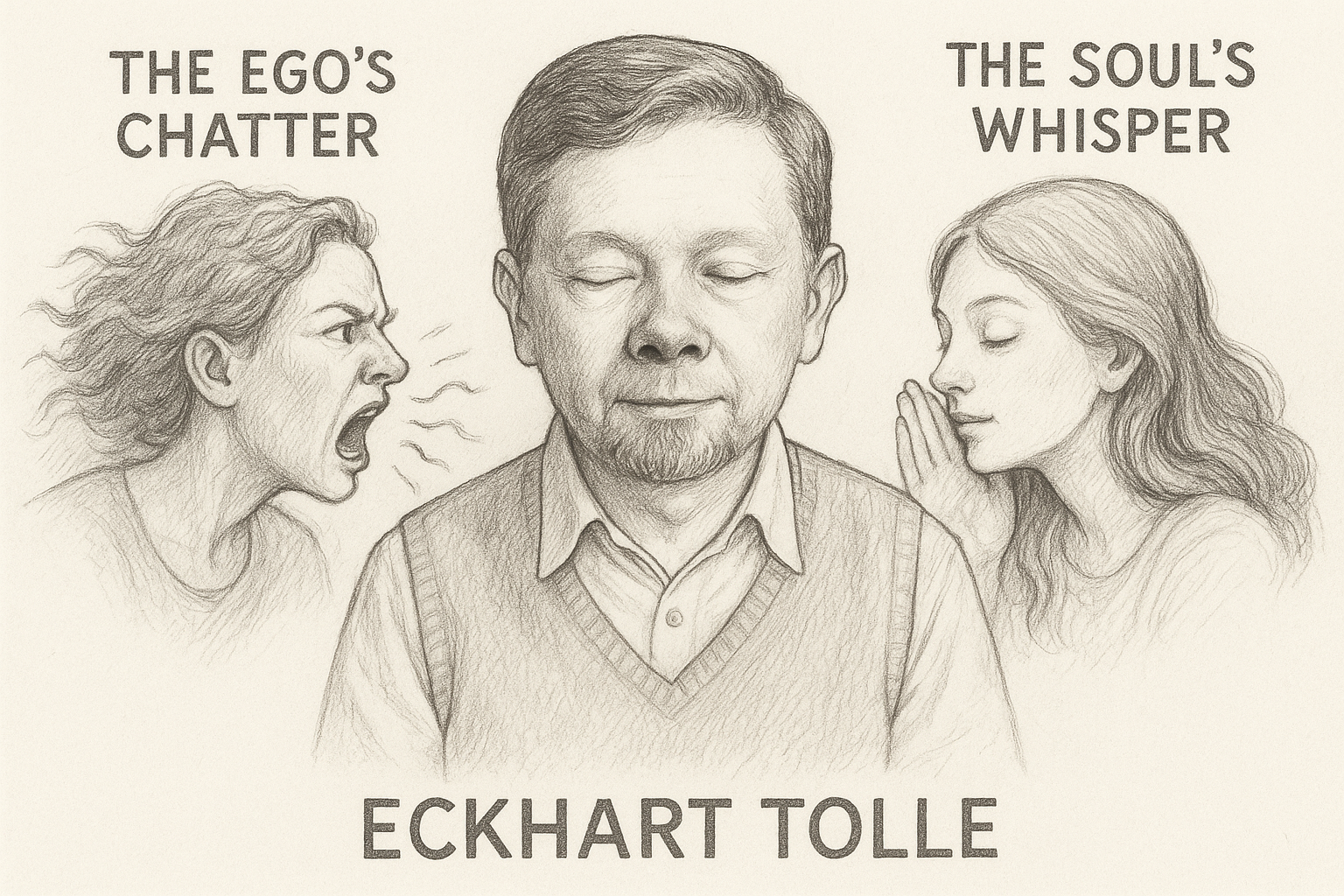
- Ego-driven thoughts arise from external validation (e.g., “I want to be seen as a writer”) or superficial desires (e.g., the 17-year-old girl aspiring to be a brain surgeon for prestige, not passion).
- Intuition emerges from a deeper, formless place within. It feels like a quiet, peaceful knowing, often accompanied by a sense that something “wants to be born through you.” Tolle emphasizes that intuition is not tainted by fear, anger, or conditioning.
- The Creative Process and Resistance:
- Question: How to navigate resistance when pursuing creative endeavors like writing a book?
- Answer:
- Create space: Dedicate regular, uninterrupted time for creativity, even if progress feels slow. Honor the process by showing up consistently.
- Resistance as momentum: Resistance often stems from the inertia of habitual life. Persist through it to build creative momentum.
- Formlessness to form: Creativity begins as inspiration (formlessness) and requires the mind to shape it into tangible work (form).
- Trusting Feelings vs. Emotional Reactivity:
- Question: Can we trust our feelings and intuition?
- Answer:
- Acknowledge, don’t blindly trust: Feelings rooted in fear, past conditioning, or misinterpretations (e.g., the woman fearing Tolle might harm her) are unreliable guides.
- True intuition arises from presence. It carries a quiet strength and clarity, free from nervous energy or negativity.
- Non-Reactivity and Presence:
- Example: Tolle’s story of the woman who initially rejected living with him due to fear. By responding non-reactively (“That’s fine”), he avoided ego-driven conflict.
- Lesson: Reactivity amplifies problems. Presence allows simplicity and avoids reinforcing the ego’s need to “make others wrong.”
- Ego’s Role in Conflict and Storytelling:
- Question: Why do we often feel “right” while others are “wrong”?
- Answer:
- The ego thrives on narratives that reinforce separation and superiority (e.g., complaining about others’ faults).
- Zen master parable: By refusing to engage in defending himself against false accusations, the master avoided ego-driven drama. The lesson: Detach from stories that fuel conflict.
Practical Takeaways
- For Creativity:
- Prioritize consistency over perfection. Even minimal daily progress (e.g., writing three words) builds momentum.
- Recognize whether your motivation is egoic (external validation) or intuitive (an inner urge to express).
- For Relationships and Reactivity:
- Pause before reacting. Ask: Am I adding unnecessary drama to this situation?
- Avoid amplifying conflicts by retelling stories that paint others as “wrong.”
- For Trusting Intuition:
- Notice the quality of your feelings. Intuition feels calm and certain; ego-driven emotions are chaotic or fear-based.
- Cultivate presence through meditation or mindful observation to access deeper wisdom.
Conclusion
Eckhart Tolle’s insights remind us that authenticity arises when we discern the ego’s chatter from the soul’s whisper. By creating space for creativity, practicing non-reactivity, and grounding ourselves in presence, we align with intuition—the quiet force that guides us toward meaningful action. Whether writing a book, navigating relationships, or facing resistance, the key lies in honoring the formless within and letting it take shape without ego’s interference.
 Kika's world