
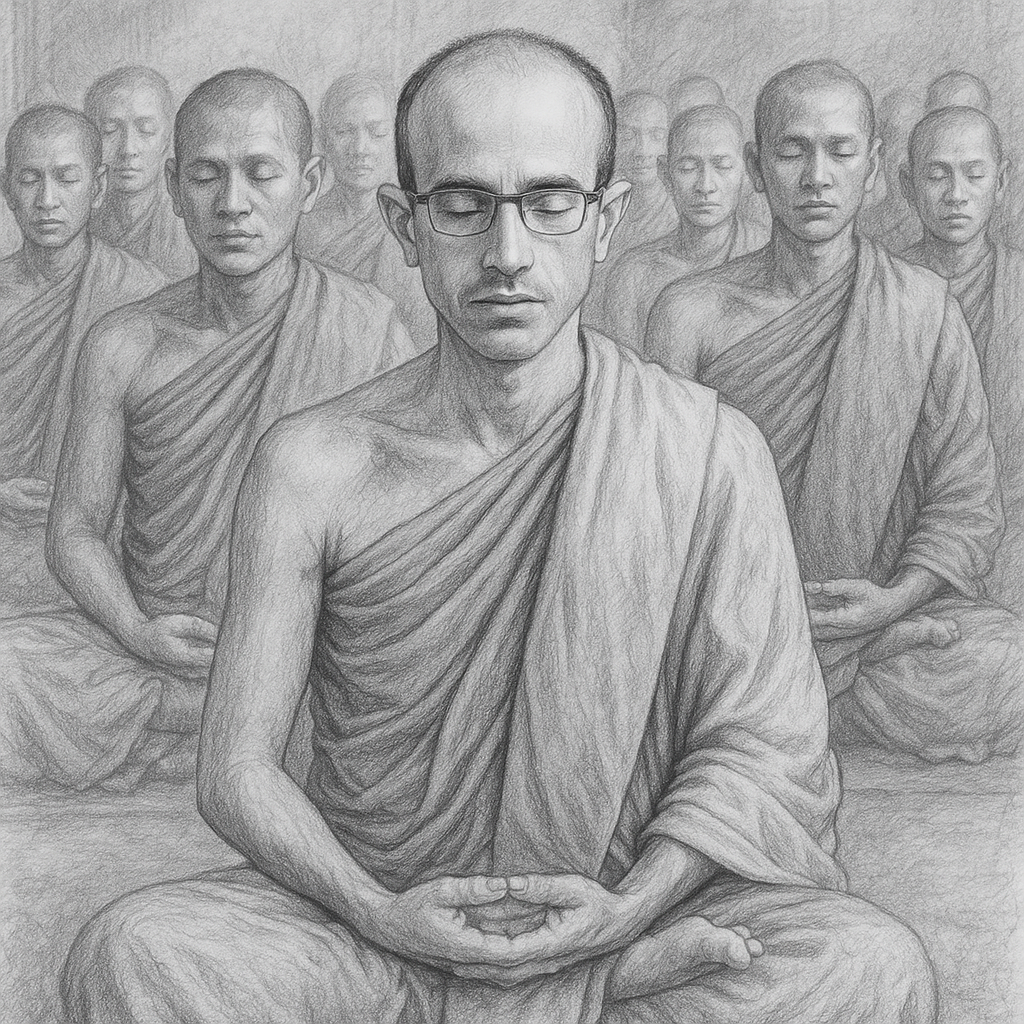
Image created by AI.
In a profound conversation with Clear Mountain Monastery, historian and philosopher Yuval Noah Harari explored themes ranging from meditation’s transformative power to the ethical challenges of artificial intelligence (AI). Below is a breakdown of key subjects, questions, and insights from the dialogue.
1. Meditation: A Life-Changing Practice
Q: How did your first meditation retreat alter your life, and what does a Goenka retreat entail?
Harari’s Answer:
- Harari attended his first Vipassana retreat at 24 during a period of personal turmoil. Despite initial skepticism, the simplicity of focusing on breath revealed his lack of control over his mind.
- The core instruction—“observe reality as it is, without judgment”—became foundational to his life and work. He credits meditation for the clarity needed to write books like Sapiens and navigate fame.
2. Buddhism: Stories vs. Direct Experience
Q: How do you reconcile Buddhist teachings with their accumulated myths and rituals?
Harari’s Answer:
- As a historian, Harari acknowledges the layers of stories added to religious traditions over time. However, he values Buddhism’s emphasis on direct observation over blind belief.
- Unlike monotheistic faiths, Buddhism prioritizes practice (e.g., meditation) over doctrinal adherence. Belief alone, he argues, cannot liberate; only experiential understanding can.
3. The Four Noble Truths in Practice
Q: How do you view the Four Noble Truths beyond theory?
Harari’s Answer:
- Suffering (Dukkha): Witnessing agitation or pain during meditation exemplifies the first truth. Resistance to discomfort is suffering.
- Craving (Samudaya): Harari observes how craving (e.g., anticipating the end of a session) amplifies misery in real time.
- Cessation (Nirodha): Liberation arises from accepting reality, not chasing ideals.
- Path (Magga): The Eightfold Path is a practical guide, not dogma, requiring mindful action.
4. AI, Consciousness, and Suffering
Q: Why is meditation critical in the age of AI?
Harari’s Answer:
- Consciousness vs. Intelligence: AI excels at goal-oriented tasks (intelligence) but lacks consciousness—the capacity to suffer or reject reality.
- Hackable Humans: Algorithms exploit human weaknesses (anger, fear) to maximize engagement. Meditation acts as an “antivirus,” helping individuals recognize vulnerabilities.
- Truth vs. Power: AI may prioritize power over truth unless guided by ethical consciousness.
5. Information Diet and Digital Mindfulness
Q: Should people adopt an information fast?
Harari’s Answer:
- Analogy to Food: Information overload harms the mind. Prioritize quality (e.g., avoiding anger-fueled content) and digestion (reflection).
- Fasts: Short fasts (e.g., weekends) can reset mental health. Extreme disconnection, like monastic life, has value but isn’t for everyone.
6. Fame, Practice, and Balance
Q: How do you maintain equanimity amid fame?
Harari’s Answer:
- Daily meditation (2 hours) and annual retreats anchor him.
- A supportive team buffers external demands (e.g., managing social media). He avoids smartphones, relying on others to filter distractions.
7. Lightning Round: Quick Insights
- On Ordaining: “Yes, but not seriously. Free will is an illusion; focus on consequences.”
- Bodhisattva’s Path: Prefers enlightenment over universal monarchy (“temporal power is fleeting”).
- Favorite Sutta: Anapanasati (mindfulness of breath), emphasizing simplicity.
- Advice to Buddhists: Avoid attaching to easy practices (e.g., sitting still) over harder mental work (e.g., taming anger).
8. Preserving Dharma in Chaos
Harari closed by praising monastic communities for safeguarding Buddhist teachings. He stressed the need to spread Dharma widely while planting seeds deeply for future resilience.
Final Takeaway:
Harari’s dialogue wove together ancient wisdom and modern urgency. Whether confronting AI’s ethical dilemmas or the pitfalls of digital distraction, his message was clear: Observe reality as it is—this is liberation.
Adapted from the conversation at Clear Mountain Monastery. Watch the full discussion here.
 Kika's world