
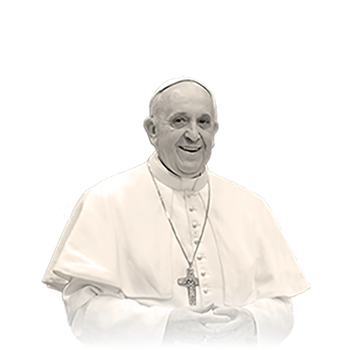
The Prophecy of the Popes — A Quick Overview:
This prophecy lists 112 cryptic mottos for each Pope, from Celestine II (1143) up to the final one, described as:
“In the final persecution of the Holy Roman Church, there will sit Peter the Roman, who will feed his flock amid many tribulations, after which the seven-hilled city will be destroyed, and the dreadful Judge will judge the people.”
This last pope is not given a number, unlike the others — another mysterious detail that gives it apocalyptic weight.
Pope Francis as “Peter the Roman” — How Does He Fit?
Though he didn’t take the name “Peter,” Francis (born Jorge Mario Bergoglio) strongly fits the archetype:
1. The “Peter” Archetype — The Shepherd
- Like St. Peter, the first pope, Francis focused on humility, service, and shepherding the global flock.
- He repeatedly emphasized feeding the poor, healing division, and serving on the margins — echoing the essence of Peter’s role.
- His papacy was full of “tribulations” — internal Church scandal, climate crisis, COVID-19, wars, and major geopolitical shifts.
2. “The Roman” — Symbolic Identity
- Though Francis was Argentinian, he was a Jesuit, an order founded in Rome, and he chose to stay closely connected to the Basilica of St. Mary Major — one of the most Roman of sites.
- He deeply embodied the Roman Catholic tradition, while challenging its rigidity — holding it, yet evolving it.
3. Final Tribulations & Judgment Themes
- Francis warned repeatedly of a coming “Third World War fought in pieces.”
- He often invoked “the cry of the Earth and the poor” — calling for repentance, unity, and action as a kind of global moral reckoning.
- His final testament reportedly included prayers and suffering “offered for world peace.”
These echo themes of tribulation, judgment, and transformation mentioned in the prophecy.
🏛️ “Destruction of the Seven-Hilled City” – Literal or Symbolic?
Traditionally this is understood to mean Rome, the literal city built on seven hills. Some interpretations expect an actual fall of the Vatican’s influence, others see it more symbolically:
- A collapse of institutional religious authority.
- A transition from centralized dogma to decentralized spirituality.
- Possibly even a new beginning after destruction — akin to death and rebirth.
🌱 So What Now?
We’re at a moment of global uncertainty and transition:
- The next Pope’s direction will be critical.
- The Church may split, renew, or radically transform.
- Spiritual leadership might evolve away from Rome — toward grassroots movements, interfaith coalitions, or digital communities.
Whether one takes the prophecy literally, symbolically, or mythologically, Pope Francis’ death feels like the closing of a major spiritual chapter in human history — and the world now watches what the next one will be.
 Kika's world