
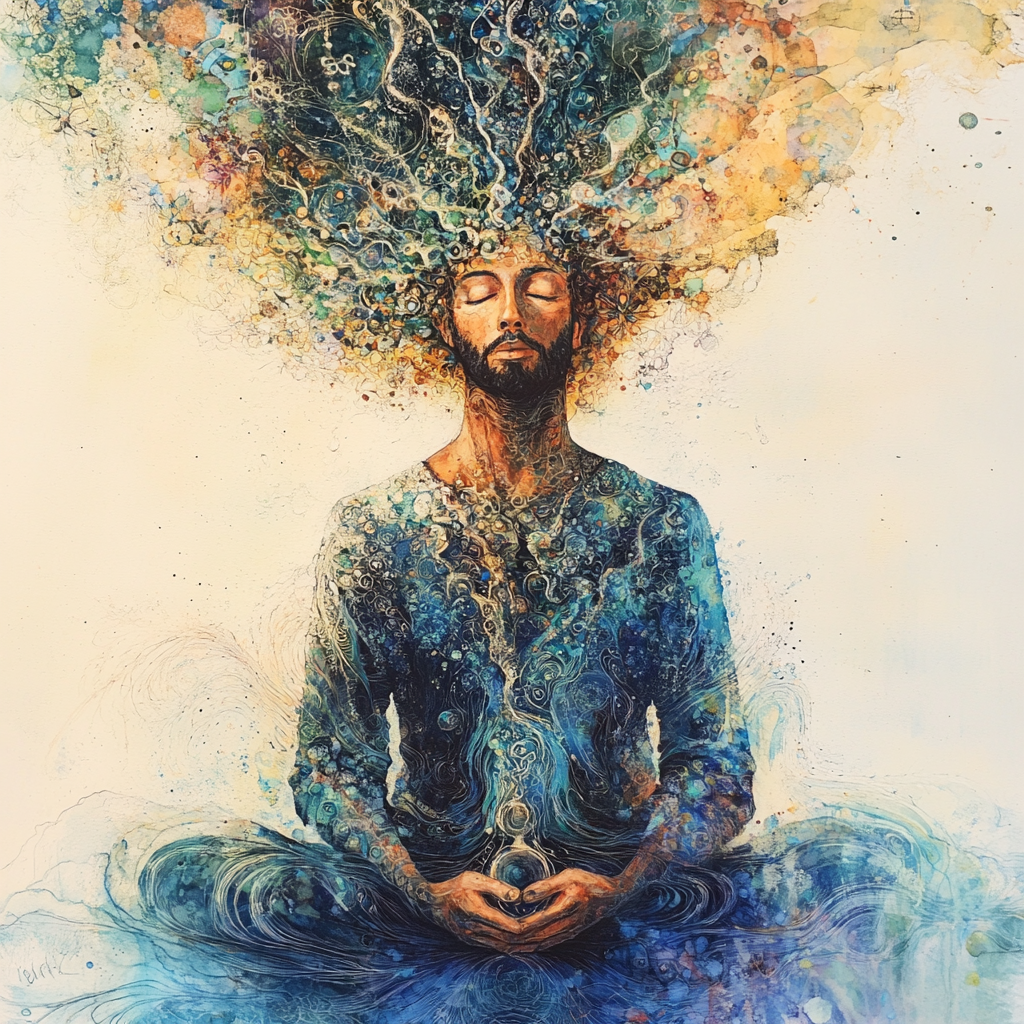
Gestalt Therapy and Sufism, originating from distinct traditions—one rooted in modern Western psychology and the other in Islamic mysticism—offer profound insights into human transformation, self-awareness, and wholeness. Despite their different cultural and historical backgrounds, both share a deep focus on direct experience, present-moment awareness, and the integration of opposites. This paper explores the commonalities between Gestalt Therapy and Sufism, highlighting their contributions to personal and spiritual growth.
1. The Primacy of Present-Moment Awareness
Gestalt Therapy places strong emphasis on the “here and now,” encouraging individuals to remain fully present with their emotions, thoughts, and bodily sensations. This awareness fosters self-regulation and personal growth. Fritz Perls, the founder of Gestalt Therapy, famously stated, “Lose your mind and come to your senses.”
Similarly, Sufism teaches the importance of being fully present with God (the Divine), cultivating deep awareness through practices like zikr (remembrance of God), meditation, and poetry. As Rumi said, “Be like a river in generosity and help, be like the sun in compassion and mercy, be like the night in covering others’ faults.” The mystical path in Sufism urges practitioners to detach from past regrets and future anxieties, focusing on the immediacy of divine presence.
2. A Holistic View of the Self
Both traditions view human beings as integrated wholes:
- Gestalt Therapy integrates mind, body, and emotions, rejecting artificial separations between thought and feeling.
- Sufism embraces the unity of heart, mind, and soul, advocating for a balanced spiritual and worldly life. As Rumi expressed, “You were born with wings, why prefer to crawl through life?”
3. Experiential Learning and Direct Experience
Rather than relying solely on intellectual knowledge, both traditions prioritize experiential learning:
- Gestalt Therapy employs techniques such as role-playing, the “empty chair” exercise, and heightened bodily awareness to facilitate transformation.
- Sufism encourages direct experience of divine love and mystical states (hal) through poetry, dance (such as the Whirling Dervishes of Mevlevi tradition), and spiritual companionship (sohbet). Rumi encapsulated this experiential essence in his words: “Don’t grieve. Anything you lose comes round in another form.”
4. The Paradoxical Nature of Change
The Paradoxical Theory of Change in Gestalt Therapy posits that true transformation occurs when individuals fully accept themselves as they are, rather than striving to become something else. Perls articulated this by saying, “Change occurs when one becomes what he is, not when he tries to become what he is not.”
Similarly, Sufism emphasizes tawakkul (trust in God) and fana (the dissolution of the ego). Rather than forcing spiritual progress, the seeker surrenders to divine will, allowing transformation to unfold organically. Rumi’s wisdom aligns with this: “Try not to resist the changes that come your way. Instead, let life live through you.”
5. The Role of Dialogue and Relationship
- Gestalt Therapy follows Martin Buber’s “I-Thou” philosophy, fostering authentic relationships and self-discovery through direct engagement with others.
- Sufism values the teacher-student relationship, as well as deep conversations (sohbet) among seekers. The Sufi path is often navigated through the wisdom imparted by a Murshid (spiritual guide), emphasizing relational and communal growth. Rumi beautifully described the importance of companionship: “Be with those who help your being.”
6. The Integration of Opposites
Gestalt Therapy helps individuals embrace their internal polarities—such as strength and vulnerability, love and fear—leading to a more integrated self.
Sufism also teaches about divine paradoxes, such as the balance between jalal (God’s majesty, severity) and jamal (God’s beauty, gentleness). The seeker is encouraged to recognize and integrate these dualities within themselves, achieving spiritual balance. Rumi said, “Don’t get lost in your pain, know that one day your pain will become your cure.”
7. Healing through Awareness and Love
- Gestalt Therapy asserts that self-awareness is the key to healing and personal transformation. Perls emphasized, “Awareness per se—by and of itself—can be curative.”
- Sufism places love (ishq) at the center of its teachings, viewing it as the force that dissolves the ego and leads to divine unity. Rumi poetically expressed, “The wound is the place where the light enters you.”
While Gestalt Therapy and Sufism emerge from different traditions, their shared emphasis on presence, holistic integration, paradox, and love highlights their mutual potential for personal and spiritual development. By examining these commonalities, we gain deeper insight into how psychological and spiritual traditions can inform and enrich one another, offering complementary pathways to self-realization and wholeness.
 Kika's world