
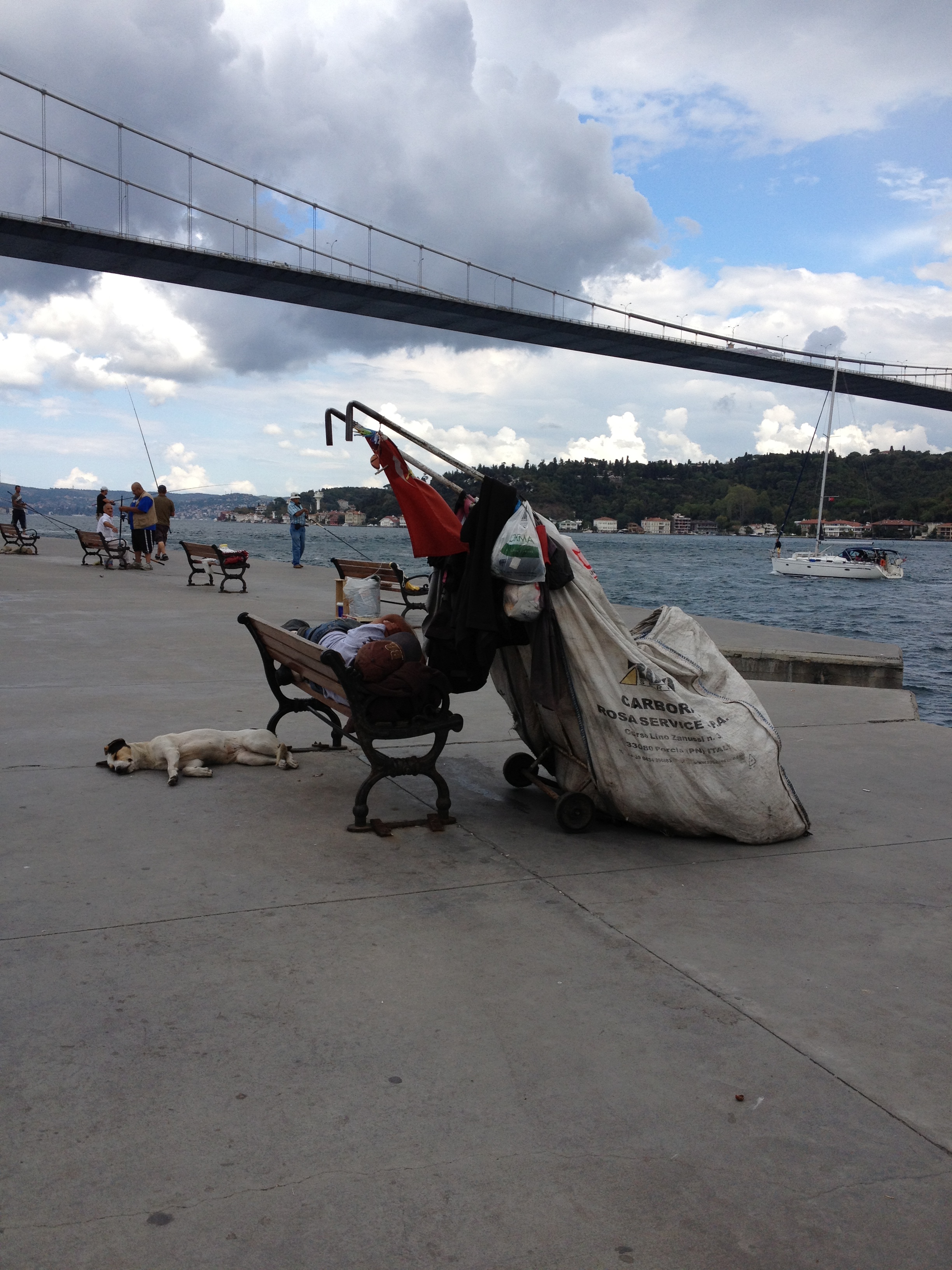
Photo courtesy: kikasworld.com / The bosphorus bridge, a homeles and a stray dog.
Shelter overpopulation presents a significant challenge in many regions, particularly where adoption rates are low and financial resources are limited. To address these issues, a multifaceted approach is required. Several countries and organizations have implemented innovative strategies to alleviate the pressures on shelters and improve the welfare of stray animals.
Solutions and Examples
- Community Foster Programs
Example: Los Angeles, USA
Los Angeles has developed a robust community foster program that involves citizens in the care of stray animals. Foster programs temporarily place animals in homes rather than in overcrowded shelters. This not only alleviates the burden on shelters but also socializes the animals, making them more adoptable. The city provides resources and support to foster families, including veterinary care and supplies.
- Low-Cost or Free Spay/Neuter Clinics
Example: Curitiba, Brazil
Brazil has successfully implemented free spay/neuter funded by the municipal government and NGOs. These clinics are crucial in preventing the birth of unwanted litters, thus reducing the future stray population. By targeting low-income neighborhoods, the city ensures that pet owners who might not afford sterilization services can access them.
- Public-Private Partnerships
Example: New York City, USA
New York City has benefited from public-private partnerships, where businesses and philanthropists contribute to the funding and operation of animal shelters. Initiatives like the Mayor’s Alliance for NYC’s Animals bring together various stakeholders, including corporate sponsors and nonprofit organizations, to support shelters financially and logistically.
- Adoption Drives and Events
Example: Delhi, India
Delhi has organized large-scale adoption drives and events to boost the adoption rates of shelter animals. These events are often held in public spaces like parks and shopping malls, making it convenient for people to meet and adopt animals. The city’s animal welfare organizations work together to promote these events through social media and local advertising.
- Corporate Sponsorship and Social Media Campaigns
Example: Toronto, Canada
Toronto’s animal shelters have partnered with local businesses for sponsorship and launched effective social media campaigns. These campaigns highlight individual animals, telling their stories and showcasing their personalities to attract potential adopters. Social media platforms are also used to raise awareness about the importance of adoption and responsible pet ownership.
- Volunteer and Internship Programs
Example: Barcelona, Spain
Barcelona’s shelters have created volunteer and internship programs that engage the community and provide essential labor. Volunteers help with daily operations, animal care, and public outreach, while internships offer hands-on experience for students studying veterinary science or animal care. This reduces operational costs and builds a community of advocates for animal welfare.
- Mobile Adoption Units
Example: Sydney, Australia
Sydney has introduced mobile adoption units that travel to different neighborhoods, increasing the visibility of adoptable animals. These units are equipped with all necessary amenities to showcase animals in a comfortable setting, and they make it easier for people to adopt without traveling to the shelter.
- Community Cat Programs
Example: San Francisco, USA
San Francisco’s Community Cat Program involves TNR (Trap-Neuter-Return) combined with managed cat colonies. Local residents take responsibility for feeding and monitoring the cats, reducing the number of strays entering shelters. This program helps stabilize the population while ensuring the cats are healthy and cared for.
Leveraging Technology
- Online Platforms for Adoption
Example: Petfinder, International
Platforms like Petfinder have revolutionized the adoption process by creating a comprehensive online database of adoptable animals. Shelters and rescues list their animals on the platform, which potential adopters can browse. This increases the reach of shelters and improves adoption rates by connecting more people with animals in need.
- Crowdfunding and Donation Drives
Example: GoFundMe Campaigns, Worldwide
Many shelters have turned to crowdfunding platforms like GoFundMe to raise funds for their operations. These campaigns often tell compelling stories about the animals and the shelter’s needs, encouraging donations from the public. Successful campaigns can significantly alleviate financial constraints and provide necessary resources for animal care.
Addressing the Root Causes
- Education and Outreach
Example: Cape Town, South Africa
Cape Town’s animal welfare organizations focus heavily on education and outreach programs to teach communities about responsible pet ownership, the importance of spaying/neutering, and the benefits of adoption. These programs target schools, community centers, and public events, aiming to change attitudes and behaviors over the long term.
- Government Support and Subsidies
Example: Helsinki, Finland
The Finnish government provides subsidies to animal shelters to cover basic operational costs, ensuring that no shelter is financially incapable of caring for its animals. This support is coupled with strict regulations on pet ownership and breeding, further reducing the likelihood of stray animals.
Conclusion
Managing shelter overpopulation and improving the welfare of stray animals require a comprehensive and creative approach. By fostering community involvement, leveraging technology, and securing diverse funding sources, shelters can alleviate the pressures of overpopulation and create sustainable solutions. Countries and cities that have implemented these strategies demonstrate that, with collaboration and innovation, it is possible to address the challenges of stray animal populations humanely and effectively.
 Kika's world