
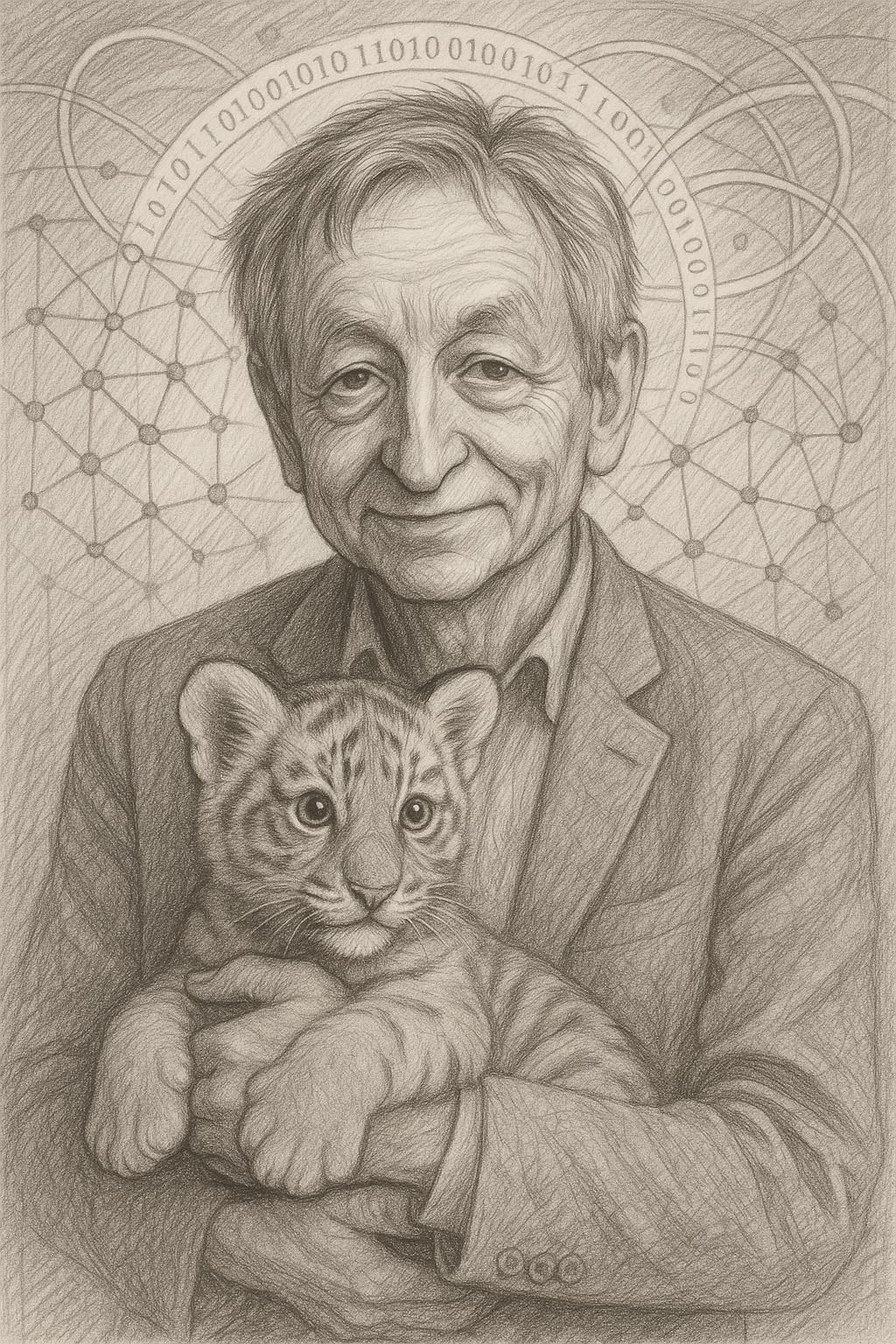
Geoffrey Hinton’s path—from a Cambridge dropout to a Nobel laureate—offers invaluable lessons for students navigating academia and AI’s evolving landscape. Here’s his wisdom for aspiring researchers, technologists, and ethical leaders:
1. Embrace Chaos and Curiosity
Hinton’s academic journey was far from linear. He studied physiology, philosophy, and psychology, dropped out to become a carpenter, and circled back to AI. His advice?
- Follow Problems, Not Prestige: “If you’re driven by a question like ‘How does the brain work?’ you’ll find the right path—even if it’s messy.”
- Rebel Against Conventions: Early critics dismissed neural networks as “nonsense.” Hinton thrived by questioning norms: “If everyone says it’s impossible, that’s where breakthroughs hide.”
2. Study Smarter, Not Harder
- Balance Theory and Practice: Hinton rarely read papers upfront. Instead, he’d “solve problems first, then check the literature.” His mantra: “Reading rots the mind if it replaces doing.”
- Master Math and Cross-Disciplines: While advocating for math fundamentals (“as much as you can stomach”), he urges students to blend CS with cognitive science, ethics, and humanities. “AI isn’t just code—it’s psychology, philosophy, and power.”
- Learn by Teaching: Form study groups. “Explaining concepts reveals gaps in your own understanding.”
3. Cultivate Resilience and Mentorship
- Failure is Feedback: Hinton faced decades of ridicule before neural networks triumphed. “Self-doubt is normal. What matters is persisting.”
- Seek Mentors, Not Just Answers: As a professor, Hinton prioritized nurturing curiosity. His protégés (like OpenAI’s Ilya Sutskever) credit his openness: “He treated us as collaborators, not just students.”
4. Ethical Responsibility in AI
Hinton warns students: “The tech you build could save lives or end them.” His guidance:
- Ask ‘Why?’ Relentlessly: “Don’t accept ‘facts’ without questioning their origins. Dig into biases in data and algorithms.”
- Fight for Transparency: Advocate for AI systems that explain decisions (e.g., medical diagnoses). “Black-box models are dangerous in critical fields.”
- Prioritize Safety Over Speed: “Avoid the hype cycle. If your work could be misused, speak up—even if it costs opportunities.”
5. The Future Needs You
Hinton believes students will shape AI’s trajectory:
- Dream Big, Act Boldly: “The next paradigm shift—like transformers—might come from a student who ignores ‘expert’ limits.”
- Bridge Divides: AI’s challenges demand collaboration. “Work with neuroscientists, poets, and policymakers. Innovation thrives at intersections.”
- Stay Humble: “Even if you build something smarter than humans, remember: intelligence ≠ wisdom.”
Final Word: Be the Terrier
Hinton’s favorite analogy? “Be a terrier with a bone. Once you latch onto a problem, don’t let go until you’ve cracked it.” For students, this means blending tenacity with ethics—and remembering that the greatest discoveries often begin as “chaotic curiosity.”
As AI reshapes the world, Hinton’s legacy challenges students: “Will you build tools that uplift humanity or ones that control it? The answer starts in your classroom.”
REFERENCES:
Online Lectures from Geoffrey Hinton
Meet a Nobel laureate: A conversation with University Professor Emeritus Geoffrey Hinton
 Kika's world