
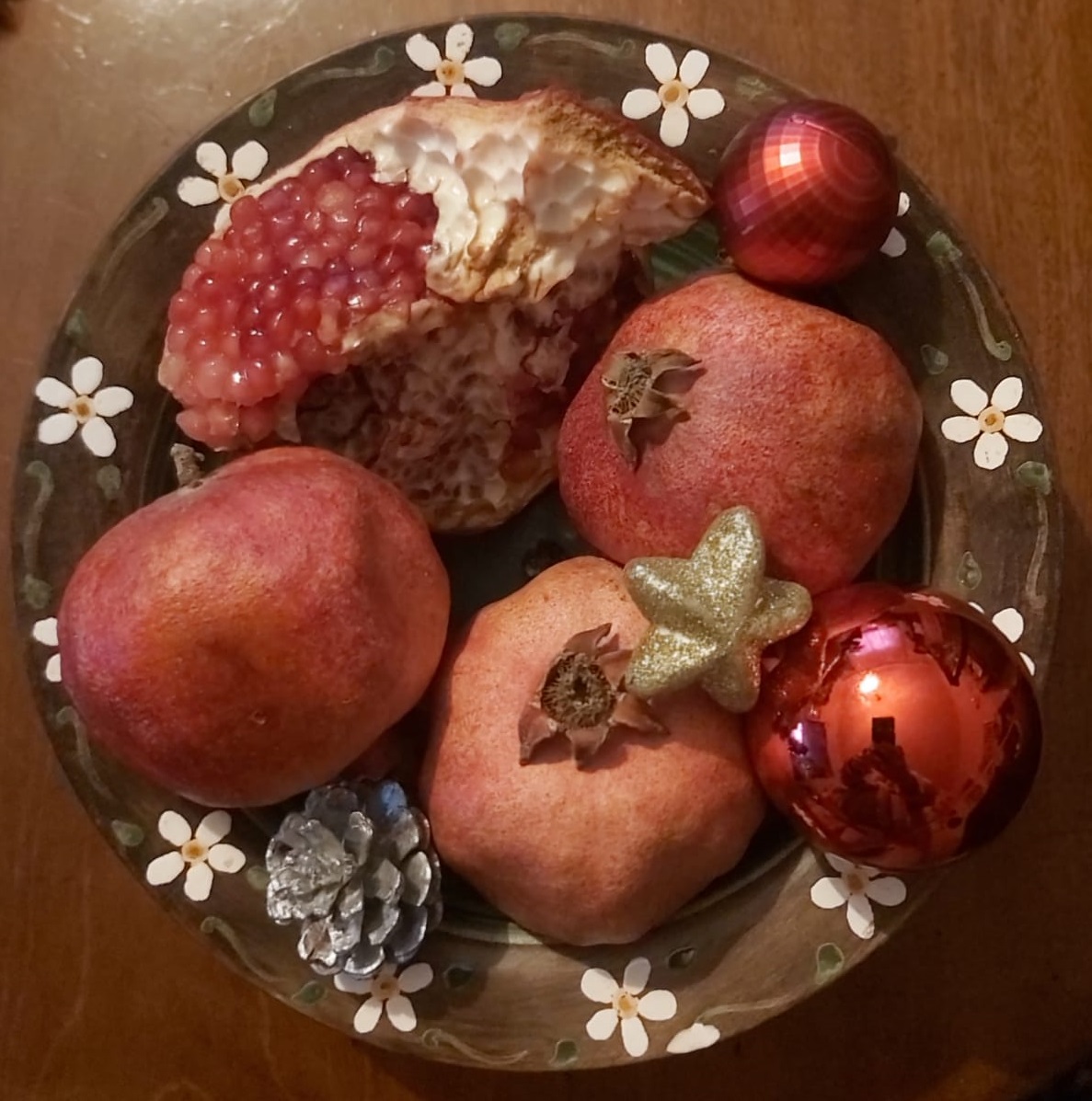
Few fruits capture the imagination quite like the pomegranate. With its ruby-red seeds and rich symbolism, this ancient fruit has been revered for millennia as a symbol of life, fertility, and abundance. Whether smashed on the ground during Greek New Year celebrations or featured in mystical rituals, the pomegranate holds a unique place in history, culture, and mythology. Join us on a juicy journey as we explore where pomegranates come from, the rituals and traditions they inspire, and their enduring allure.
A Brief History: Where Pomegranates Are Cultivated
Pomegranates (Punica granatum) are thought to have originated in the region spanning modern-day Iran and Northern India. Over time, they spread to the Mediterranean, the Middle East, and beyond, thanks to ancient trade routes. Today, they thrive in warm, arid climates and are cultivated in countries such as:
- Iran: The pomegranate’s birthplace and home to countless varieties, each with unique flavors and uses. Iranian culture celebrates the fruit’s deep symbolism in poetry and art.
- India: A significant producer, where pomegranates are used in both cuisine and Ayurvedic medicine.
- Turkey and Greece: Known for their high-quality exports and vibrant traditions surrounding the fruit.
- Spain and Italy: Pomegranates found their way to Europe via the Moors, becoming a beloved ingredient in Mediterranean cooking.
- United States: Particularly California, where the fruit’s popularity has skyrocketed as a superfood in recent years.
Each region brings its own culinary and cultural spin to the pomegranate, contributing to its global popularity.
Symbolism: The Fruit of Myths and Legends
From its earliest days, the pomegranate has been steeped in symbolism. Its round shape and abundance of seeds represent life, fertility, and prosperity. Here are some of the most intriguing myths and beliefs surrounding this magical fruit:
- Greek Mythology: Perhaps the most famous pomegranate tale involves Persephone, the daughter of Demeter. After eating six pomegranate seeds in the underworld, she was doomed to spend half the year there, giving rise to the cycle of seasons.
- Christianity: The pomegranate is often depicted in religious art, symbolizing the resurrection of Jesus and eternal life.
- Judaism: The fruit is a common feature in Rosh Hashanah celebrations, symbolizing righteousness, as it is said to have 613 seeds—the same number as the mitzvot (commandments) in the Torah.
- Islam: The Qur’an mentions pomegranates as one of the fruits found in paradise, highlighting their divine origin.
Rituals Around the World
Pomegranates aren’t just delicious; they’re also central to many rituals and traditions. Here’s how different cultures celebrate this special fruit:
1. Greece: Smashing for Good Luck
In Greece, pomegranates are synonymous with good fortune. During New Year’s celebrations, a pomegranate is smashed on the ground at the entrance of the house. The more seeds that scatter, the luckier the household is believed to be for the coming year.
2. Turkey: A Symbol of Abundance
In Turkish weddings, pomegranates symbolize fertility and prosperity. Brides may throw a pomegranate to the ground, and the number of seeds that burst out is thought to predict the number of children the couple will have.
3. India: Health and Spirituality
In India, pomegranates play a role in Ayurvedic rituals. The fruit is considered a “purifier” and is often used in health rituals to cleanse the body and spirit. Its juice is also offered to deities during religious ceremonies.
4. Armenia: Artistic Expressions
Pomegranates are a national symbol of Armenia, representing eternity and prosperity. The fruit is featured prominently in traditional art, jewelry, and even architecture.
5. Middle Eastern Traditions
In Iran, pomegranates are a staple of Yalda Night, an ancient festival marking the longest night of the year. Families gather to eat pomegranate seeds mixed with walnuts, symbolizing the hope for brighter days ahead.
Pomegranates in Mysticism and Magic
Beyond their cultural and culinary roles, pomegranates have long been associated with mystical and magical practices. Their vibrant color and abundance of seeds make them a potent symbol of life force and energy.
- Love Spells: In some cultures, pomegranate seeds are used in love rituals to attract a soulmate or rekindle passion in a relationship.
- Energy Cleansing: The fruit’s juice is sometimes used in spiritual cleanses to remove negative energy and restore balance.
- Divination: Pomegranate seeds are occasionally used in fortune-telling practices. For example, scattering seeds and interpreting their patterns can reveal answers to life’s questions.
Want to try a simple ritual at home? Here’s a fun one:
- Take a fresh pomegranate and carefully extract the seeds.
- While doing so, think about your intentions for abundance, love, or health.
- Eat the seeds slowly, visualizing your intentions coming to life with each bite.
Pomegranates in Pop Culture
The pomegranate has made its way into modern pop culture, often as a symbol of luxury and health. Here are a few notable mentions:
- Art and Literature: The fruit appears in works by artists like Botticelli and writers like Shakespeare, who referenced pomegranate trees in Romeo and Juliet.
- Fashion: Designers have incorporated pomegranate motifs into fabrics and accessories, celebrating its timeless appeal.
- Health Craze: In recent years, pomegranates have been hailed as a superfood, packed with antioxidants and vitamins. They’ve become a staple in smoothies, skincare products, and even cocktails.
Fun Facts About Pomegranates
Here are some lighthearted tidbits to liven up your next conversation about this fabulous fruit:
- A single pomegranate can contain over 1,000 seeds!
- The name “pomegranate” comes from the Latin pomum (apple) and granatum (seeded).
- Ancient Egyptians were buried with pomegranates as a symbol of their hope for eternal life.
- Pomegranates were introduced to the Americas by Spanish settlers in the 16th century.
Conclusion: A Fruit Worth Celebrating
Whether you’re smashing one for good luck, savoring its sweet-tart seeds, or marveling at its storied past, the pomegranate is much more than just a fruit. It’s a bridge between cultures, a symbol of life and love, and a reminder of the beauty in abundance. So the next time you crack open a pomegranate, take a moment to appreciate its juicy secrets—and maybe even start a ritual of your own!
 Kika's world