
“a great talk on trauma with Bessel van der Kolk and Chris Williamson”
Let’s say that someone has never been exposed to your ideas in the body keeps the skore, how do you introduce your thesis?
how do I introduce my things? I usually show movies. Actually Hollywood movies, because you know when you make a movie you have to show it correctly, when you see somebody getting stuck and somebody being traumatized, like scenes from “the hurt Locker” or other movies about veterans coming home or about kids who have being molested. Usually movies capture pretty well. You can really see the way that people move and people hold their bodies and how people’s bodies react to the world around them is very visible, actually.
Right so you’re trying to demonstrate an outward exposure in terms of how the body looks of an internal emotional state
Yeah it should be have can beat each other, they we look at each other and hopefully you look pretty, calm and they see you getting upset or something. I’ll go I’m saying something is upsetting him and so we give signals to each other and of course as a body oriented therapist you get pretty good in reading bodily signals.
so that everybody understands they see someone that stands in a particular way, has a facial expression in a particular way, is holding themselves, that doesn’t sound that surprising if that’s the case. Why is the traditional way that we try to think about trauma wrong? what does the traditional Paradigm get wrong?
it is interesting indeed that it’s so obvious and I actually have gotten, you know my bookstore sold five million copies, I’ve hardly had any blowback of people say that I’m getting it wrong. I mean it’s really obvious, but know we come from a world of medicine where we try to define things very carefully.
Medicine of course is a very disembodied profession, we deal with the body, but we really don’t know about the body and psychology is about minds and how people think and about their behavior uh but psychology is a very has also traditionally been a very disembodied profession and the people who to my mind really get it are, theater directors, teachers, yoga instructors, martial arts people, musicians because in the real world you really get to see how bodies really move together through the world here
what is the difference between trauma and stress then?
stress is what it’s like to be human, we’re wired for stress, we’re wired to arise to the occasion. You’re wired to have hard days and broken relationships and you know life is rough for all of us in one form or another. But when that stress is over you can like “wow I’m feeling better now” and the issue is trauma if the trauma isn’t assault on one’s being that really changes the way you feel, experience yourself, how you experience the world about you as your trauma really changes the way you move the world and who you are. so stress is a temporary thing. You have great biology of stress and there’s basically nothing wrong with stress. how we have come as far as we have as human beings but trauma gets you stuck and frozen in that particular spot of being enraged or fearful or terrified or something like that yeah.
is there a link between trauma and chronic stress? is that just another word for the same thing ?
yeah you know it gets difficult, like chronic stress, if you work on a project, if you’re in the military can actually be quite enjoyable in the way because you feel that all your capacities are being used. You see this after disasters that people who work on cleaning up disasters tend to feel very close to the people who they have gone through their experience with, gives them a sense of intimacy also and so. But the big issue that is being left out in most psychology texts and most be conceptualization is that we’re basically, we are social creatures and we don’t exist by ourselves, we don’t we always thinking about other people. We’re defining ourselves through who we belong to, what ethnic group belong to our religions, our neighborhoods etc etc. So we are social species and in trauma usually those connections with other people break down.
The very first study I did on Vietnam veterans but we found is that they actually were doing quite well during the war, but what if one of their best friends got killed? that really was what blew them up and disintegrated. It was really the loss of that social connection that really made something traumatic. We saw this again in studies after 911 in New York. You know it’s a horrendous event and all of us who are old enough to remember that most of us still are really remember very vividly what happened that time but very few people got PTSD because of was such an enormous amount of social support and nobody blamed anybody and then it turned out that PTSD were people who were in domestic violent relationships or who do not feel safe at home actually.
that’s interesting
so being able to go home at night and feel safe in your own home, with the people you’re with, is a very powerful protection against getting messed up by outside events.
yeah the role of casting off the stress, you know, my favorite example of this is if anyone that’s listening has an intense phone call they’re on the phone to somebody and they it’s a difficult work call or they’re really trying to think things out but it’s Audio Only they’re not on Zoom. uh you’ll find yourself like a puppet master has gotten a hold of you and made you stand up from your seat and you’ll find yourself walking around the room yeah but why
if you have somebody who you trust and care for who’s in the next room you tell them “honey listen what just happened to me what this [ __ ] did to me” and Y says “boy I don’t know how you can stand that” when the person backs you up, you feel much better inside but. If your honey says “well I’m not surprised, he said that to you because I see the same stupid thing that you do all the time and he’s absolutely right in the way he talks to you” then it really becomes a much more invasive issue that’s the social reception makes a huge difference.
Why would it be the case can you think of an adaptive reason or an explanation for why individuals going through trauma would shield themselves from other people around them? given that people around them are exactly the thing they need to improve their relationship to that emotional state?
That’s because they have learned that the people around them at some points could not be trusted. The people who are closer to them, hurt him or push him away, or they anything to do with him or criticize him all the time and so uh you know it is really what you learn during your trauma is that “I thought I could trust people, but I can’t. I trust that people will be there for me, but I can’t” and that becomes so you get very suspicious about people reaching out to you because you have had experiences that people do terrible things to you and so that may get become part of your wo and warp of your brain actually yeah
what’s your definition of trauma? is it an event which occurs outside the bounds of normal human experience?
we started off and it was a crazy definition because uh you know the majority of people have had trauma in their lives you know I keep looking for people who come from a perfectly normal family and I still have a hard time finding them actually. we all have major challenges and so see know my organization the time Research Foundation just is putting out statements right now and we’re still really vestling with the idea how do you define trauma and the trauma is really that you get hurt by something and you get changed by it but that something may be any variety of things it may be a rape you very clear maybe seeing your kid being run over killed that’s very clear but sometimes it’s just being chronically ignored and dismissed that eventually really gets into you and that becomes part of your framework of with who you see the world yeah

when it comes to the body keeping the score, what do you mean how does the body actually register this? what is the mechanism? how does it manifest ?
the brain registeres it but your body experiences it, and your body it out so what happens is that you don’t remember the trauma so much as you continue to react as if you’re being traumatized. So let’s say you have been sexually assaulted and you go on with your life. You say “oh this was just one incident. I’m really stupid for getting involved in it, it’s not happening” and then you get excited about somebody who you want to be with and then that person touches you and your body freezes. Or you start crying, or you become really angry and your body reacts as if you’re getting assaulted. You don’t make that connection say “oh I really like this guy and I like to be involved with him but my memory of the trauma interferes” No it’s an automatic mind process that gets in the way of your letting go at that point.
yeah you say that trauma robs you of the feeling that you are in charge of yourself , harrowing but accurate statement I think
yeah and so you know people defend themselves against that and say “oh it is because he did something wrong” or because “he talked to me the wrong way” or but at the end I’m just writing our new book, finished last chapter of our new book and I start off with a quote from Marcel Proust “in order to change you need to see the world with new eyes”
So at the end if you really want to recover from trauma, you need to, we need to help people to change their perceptions of the world, we’re not going to change the world out there. But we’re going to change what they see and how they experience themselves and the people around.
well ultimately we are not in control of what is going to happen to us in life. We really only have control over our reactions
well we don’t even have control of our reactions. At some point you need to go to the bathroom, at some some point you need to not hold your breath, at some point you need to go to sleep. Some people will make you angry and other people will make you feel all warm inside. And you don’t have much control over your reactions, you have some control over how you behave and that’s really the difference between little kids and adults. Little kids do whatever happens to them and they react to it. As adults we get a prefrontal cortex and hopefully most of the time we can make decisions about how we react, even though our bodies to tell us “don’t trust this guy” he can still talk to that person as if you trust him.
this is something I really want to dig into and I think a lot of people listening will resonate with this, they are thoughtful inquisitive reflective people. they like their cerebral horsepower and their cognitive ability. they understand that something can occur and they can control their behavior and yet at the same time I that they have a degree of control over their behavior even if they don’t have a degree of control over their reaction in the way it makes them feel. At the same time we also need to be aware and give respect and integrate and become noticing of the emotions that arise inside of us and I can see a degree of tension between these two things. The person that wants to feel like they’re in control of their life and has agency, the person who also want wants to appreciate and integrate the signals that their body is giving them but not be at the mercy of them .How do you think about the tension between these things ?
what terst people often have discover is how little control they have and in some ways the people who become my patients are among the most conscious people you ever hope to meet, because they’re willing to explore their themselves and most people are not so eager to do that. They want to, they rather stick with their habits in life and push away anybody who interfered to the usual habits and the people who come to my office say “I cannot stand what’s happening inside of me anymore and I need to be actually become in charge more of my own reactions”. So therapy actually is a very courageous act of confronting your internal demons and confronting the pain and hurt of your life actually yeah.
so it seems to me that when we’re talking about trauma, people have a reaction to an event which typically would not engender that reaction, they are trauma sensitive, they are overly reactive in a scenario that maybe doesn’t warrant it because of something which they have learned in their past. Is that a correct framing?
so learned I wouldn’t say learned something has been installed in them from the past and these are not higher level cognitive processes are elemental react activities that have to do with the area of the brain involved in the “housekeeping of the body” as Antonio Demasio calls it
what is that from a neuroscientific sense?
oh it is your vental Tech mental area, your amygdala, your acal gray the prunus it’s a back part of your brain, that we have in common with all animals that help us to perceive what’s happening to us. On a elementary level the same way that your dog hears the thunderstorm and crawls underneath the couch we have the same brain as the dogs have and on top of that we have a big frontal lobe that hopefully makes slightly more capable of managing our emotion is that dogs do but many people don’t
yes I’ve met many people who don’t have any more emotional control than dogs do and I think that tension between wanting to feel like “The Architects of our own life” and understanding that we have a limbic system which very much is the elephant that we sit on top of and it’s not the elephant that’s got blinders on, it’s us the rider. But we have this belief that we’re the one that’s in control . I think that tension is where some people are probably resistant to ideas like this because it feels disempowering, it feels like there is an architect pulling their strings.
well yeah yes and no. you know with any sort of self-reflection we all know that we all are aware of that in a way. You know just know there may be some people who don’t want to go there. but they are very …
I mean I understand that may not be the truth, but I think that it explains at least to me, you know, I don’t like the idea that I’m not in charge. I don’t and I will find ways to resist that belief, even if I know that it’s true, I try and sort of finagle and find ways to go through things. So I guess one of the you mentioned it earlier on different people reacting to the same event will react in different ways some. people will be traumatized and others won’t be.
people make a big deal out of that, you know having the practice that I do, wanting the center that I have for 50 years, I never meet somebody who has been traumatized I go like “boy that’s a pretty silly thing to get traumatized by” you know usually if you dig deeper to what people have been exposed to, you go like my “God and you’re still here, you’re still able to tell the story”, it is not like something happens and everybody else is fine and you got traumatized by it. Usually if you really look at the details what happens, you see that it really was a very painful experience and my reaction almost invariably hearing the story about the people I work with. what they have gone through is like “oh my God how the hell did you survive” and I never have the feeling that “oh I would have done much better than they did”.
this is something else I really wanted to dig into which is the minimization and the shame that people feel around them, not having anything worthy of being labeled as, oh no you know that was when I was a child, oh you know it was just one time, oh it was whatever, can talk to me about that. Talk to me how that can hide in the dark some of the things we’ve experienced
you know we all want to be normal. you know one thing came up in the last few days is how almost everybody wants to tell other people “I came from a very happy family” and you don’t really want to know that your father was a drunk and your mom spent half of her time in bed and stuff like that. So so we want to be normal, we want to be acceptable, and so we make a construct of ourselves, of people who are in charge of ourselves and who have always been loved by the people we close to right. That is how we like to experience ourselves, this it’s not very true, but you know we like to look good to the world
yeah no one, no one wants to admit just how insane they are I think and there’s two layers. There’s two layers to this, that I was thinking about when looking at your work; the first one being the minimization and the shame that we have around situations, that have happened to us in the past and the second one being the shame around being triggered by seemingly small events in the present
yeah yeah and and you say to yourself “don’t be stupid”. You become very judgmental about yourself and very ashamed about your own reactions, you’re ashamed, you don’t want anybody to see you for who you are
yeah it’s the story that we tell ourselves, yeah about our reactions that seems to be the really unnecessary degree of suffering that we’ve laid on top of all of this
yeah you know it’s a way of coping and so this missing things is a very good initial reaction like “I want to go on with my life and push it behind me”
I don’t want this to Define me
it’s a healthy thing to do and for a while it often times helps many people. Until you have a kid or you are in a relationship or something, that really comes closer to what happens to you and then you start feeling the old feelings and having the old reactions again and you go like “what the hell is wrong with me” you usually start with “what the hell is wrong with this person who I’m hooked up with”, you usually blame it on the other person, after a while if you’ve seen that one relationship after another ends up the same way, you go like “ maybe something to do with me”, but it’s not that’s not the automatic reaction automatic reaction is say oh “it’s because you are …”
well yeah there’s a a quote if all of your exes are [ __ ] it might not be them that’s the [ __ ] you are the common denominator between all of your exes
that’s a good summary of a…
one of the things I’ve been thinking is whether experiencing traumatic events and having trauma sensitivity predisposes us to being more sensitive to Future traumas? does this become a a recursive loop in that way?
oh yeah absolutely, that well generally you know it’s also true that some people have been traumatized become very good at stuff. So let’s look at the positive thing first, I have met a number of nurses or kindergarten teachers, who are spectacular nurses, spectacular kindergarten teachers because they were traumatized as kids and they know what I- they would have needed back then and so they give to people what they felt they didn’t get themselves as kid. That is one adaptation that happens sometimes. But more often people are out of touch and repeat that trauma early on. But I meet quite a lot of people very deep down I think to myself- I don’t say it because most people don’t have enough sense of humor about it- say go back and thank your abusive parents for having been abusive because it made you very good how to take care of dysfunctional people around you.
well I suppose if every trauma made you more susceptible to traumas, you would just have a linear graph over time of people getting more and more traumatized as they get into older age. They would just continue to accumulate and continue to get sensitive and continue to be accumulate and continue to get sensitive
yeah that’s of course not how it goesİ because people also have lives and some people are able to arrange to have lives that are more or less predictable and where they can play a useful role and where they shield themselves against unpleasant surprises more or less. Easier to do when you’re somewhat privileged person, harder to do when you’re poor and brown let’s say
is there anything that we can do during difficult events to minimize the way that they imprint on us?
you know my agenda, I’d like to say as often as I can is that in every school from K through 12 we should have weekly classes and laboratories on understanding ourselves, to learn about how our brain functions, how our body functions what happens to us when somebody touches us, what happens when we throw a ball, what happens when you make music together ,what happens when you interact with people and that to my mind the a very important part of the solution is teaching every kid from the beginning of classes. The four are Reading, Writing, arithmetic and self-regulation and make yourself an important part of the study that we do and I think our society would change if all of us would learn that systematically that we learn about brains and neuroscience and how brains interact with each other and experience what it’s like to play ball with other people, to be involved in rythmical activity what does music do for me? what does things like these crazy chi-gong movements do for me? what is it like for me to sing with other people? how do I affect other people? All this stuff should be part of our basic training. as it’s often times okay of course is for many privileged people who actually go to schools where and live in households where people learn stuff like that yeah
yeah I understand that self-regulation is a great tool for dealing with and make making yourself feel better
yeah and but also understanding yourself really knowing when I get upset, listening to that piece of music makes me feel better, or I found that when sit in front of a piano place of music that I calm myself down, if somebody if I can play volleyball with somebody and really that in your course of your education and you’re growing up, you really learn what makes you feel good and what can you do for yourself when somebody upsets you.
yeah I’m really trying to work out how much of that I really want you to dig into… is that an ability to simply cope with the emotions that come up? or is it something which will reduce down the echo that it continues in the future or is that one and the same?
though what I’m talking about really is that we raise conscious human beings who are really aware of themselves. Aware of their own reactions, who are aware of the people around them and what effect they have on other people and that this really becomes a serious area of study to live in a more conscious Society.
how can people learn to be more self-compassionate, we live in a meritocracy people want to achieve things they want to grow and and improve and yet that a lot of this seems to rely on self-compassion. What’s your advice?
you know self-compassion really comes from having been met and having been seen and that becomes your framework of yourself. So if you come from indeed a loving kind and responsive family it’s likely that you do feel self-compassionate and that when you learn that “when I fall down somebody will be there to pick me up, people don’t yell at me and scream at me from falling down, but they’re really there for me in a way”, that is how you learn to be there for yourself, also and the a huge thing that we see in our work is having a history of abuse and neglect early on your life really more or less guarantees that you see yourself as defective and wrong and not a good person and disgusting sort of stuff. An extremely difficult thing to treat.
The first thing that I’ve actually seen work for that was the research of which I was the pi on psychedelics MDMA, where we saw that psychedelics really dramatically increased people’s capacity for self-compassion, where they really are able in the psychic states to go to whatever happened to them and to really feel very deep ,believe what happened back then and they go “yeah that’s what happened to this kid, this kid was only three years old and did the best he could, or he was only eight or he didn’t know how to deal with his bullies in high school and he felt so weak and stupid but that’s all he could do”.
So on psychedelics you really -MDMA particularly- we see this emergence of this capacity to really accept yourself for what has happened to you and not blame yourself for things . And I’ve never seen it to the same degree with any other form of treatment I’ve studied.
that’s really beautiful to think about the person that you were when that thing happened to you and to say something like you did your best you know you want to pick that person up and give them a hug
but it’s not cognitive, it’s not like a frontal. it’s really in pych you really deeply experience yourself on a very deep level and it’s also outside person telling you “it wasn’t your fault”, you just -because that’s you- never believe that reallY, but it’s yourself really feeding what happened to you and getting internal sense of time so you don’t no longer identify with that kid who was being bullied or was being put down or whatever you say “oh I’m so sorry that you-I back then had to go through that”.
you say that we shouldn’t keep secret from ourselves and it seems to me that what we’re doing with psychedelics also breath work practices in some ways anything that allows you to to sort of both disregulated and regulate a little bit under control uh and make yourself feel safe to tap into these things uh it breaks down the secret wall that we are able to construct around those ah “this doesn’t feel safe I can’t think about that thing I don’t want to go back to that place” and it helps you to sink into that more
yeah and to my mind this is becoming a very urgent social issue. I don’t know whether you have heard or seen the new book by Jonathan Height
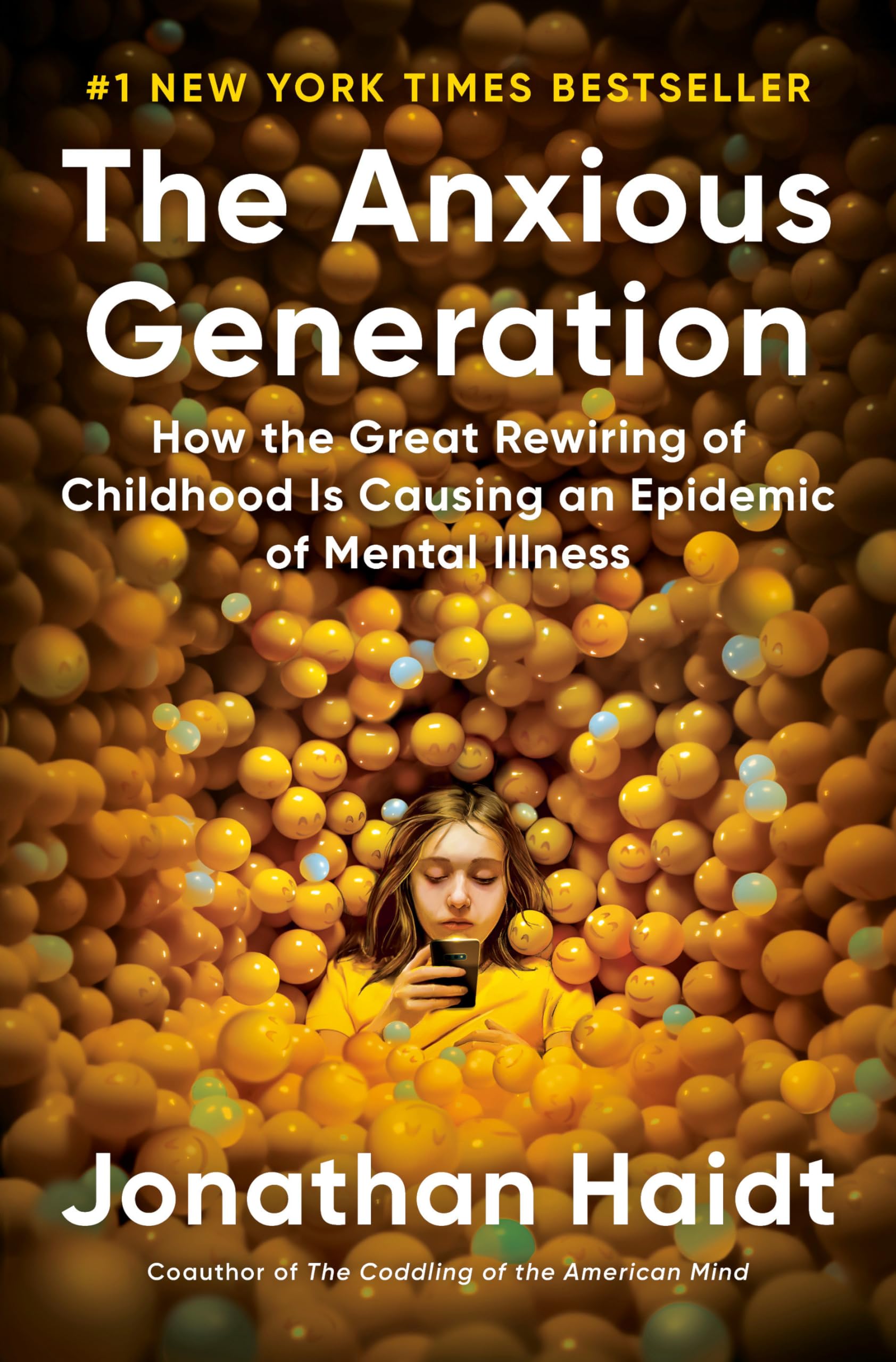
he was on the show a couple of weeks ago
very important book that we are raising our kids behind screens and not to explore and not to feel things and we give kids a false reward system by screens where they don’t have to do anything and I think screens will have a major negative effect on self- knowledge and self-experience actually, and I think we really need to listen very carefully what Jonathan has to say about that yeah
digital anesthetic is one of the ways that I think about it, people who are going through something emotionally uncomfortable can distract themselves with their screens, that results in you basically not connecting with your life, the emotions…
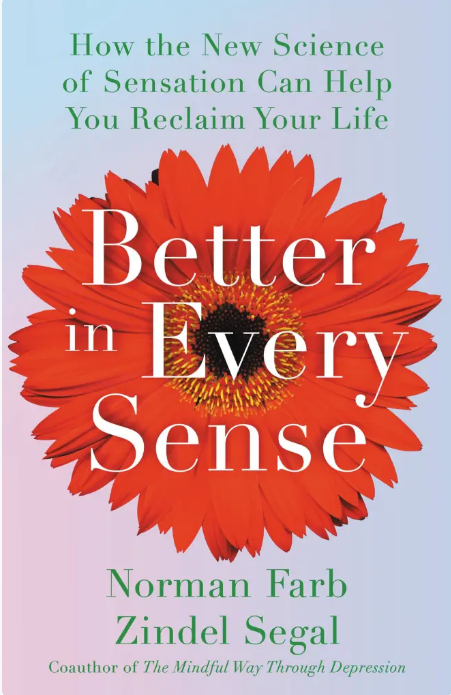
you know it’s not black or white of course, it’s okay to distract yourself, it’s okay to not confront all the misery of the world all the time. So I totally understand that and actually encourage it that when something bad happens to people, they could do something else to not dwell on it. and there actually another very important research, piece of research, that’s just beginning to make it into our consciousness by Farb and Zindel Segal about how your sensory experiences, your feeling things, your senses and doing things that make you alive, your senses, help you to get out of habitual ways of doing things.
For example I did the first study on “yoga for trauma” and we had amazingly positive results and now with the evolution of neuroscience I’m beginning to understand more and more why yoga can be so effective. Because in yoga you really pay attention to the internal sense worlds and that seems to be a very important avenue for you to feel that you can meet yourself and be in control of yourself
say more about that, why is that so important what is it about the attention being deployed?
because we all get into habits, our brain creates habitual system that’s so basically the brain is a predictive organ, the brain tells us when I talk to you in Austin Texas, I can expect certain things and if you do something that is very different from what I expect, I have to change my take of you, but ordinarily I go into a habit of doing the same thing and talking the same thing. But if your habits no longer work for you, you always blow up at your kids or you always freeze in front of your boss, you need to get a new habit and the new habits get formed by activating the sensory system in your brain. Opposite of what you do with screens, you dull your sensory system in your brain with screens by doing action, meditation, yoga, probably martial arts, stuff like that. You really activate new habits.
talk to me, there’ll be a lot of people listening you go, okay Bessel that sounds spot on that makes sense to me I understand how our emotions and our reactivity can become hyper sensitized, but this goes quite a few steps further, how does trauma manifest as an illness? an illness that people would typically recognize what are the ways that can happen?
well you know of course I’m an MD and a professor in medical school so I know the medical model but in our work I don’t have a medical model. not your disease and you areTn you know a lot of people who have never been to psychiatrist are crazy as loons and people who are be psychiatrist found most sensible people I know, so pathology is when you miss the boat, when you keep doing things that mess up your life and the life of people around you, that’s the pathology. So I you wouldn’t necessarily give that a psychiatric label but all somebody’s friends will say “they’re doing it again” you know.
yeah talk to me about some of the more typical illnesses that people would not think stress and trauma in this way contribute to and yet can stuff like fibromyalgia
you know these are no these are questions that should be asked more often uh in part because we have so few answerers to this point, is that it’s very clear that fibromyalgia, chronic pain, autoimmune diseases, I’m not saying that autoimmune diseases are caused by trauma but they certainly are made much worse by trauma, it makes you much more vulnerable to develop them, all these somatic responses, have been identified but barely studied and barely really systematic looked at, how what can you do and how can you best take care of it. But they’re clearly trauma related and they’re clearly body related and but because there is so little attention in the research world on “how we process bodily experiences”, that this is very largely still an unknown territory and my foundations I started the Trauma Research Foundation actually is particularly interested in promoting studies on these sort of things that have not been studied or funded before.
it seems interesting to me or totally unsurprising that chronic elevated concern and worry and inflammation in the mind and the body would not make… how how could it make anything better I don’t understand why that wouldn’t be something which is a contributing factor
uh it really is, but I think our academic work is not there to really systematically explore body sensations and how to change people’s relationship to their bodily experience.
well I suppose that testing that is very difficult, you know here is a dose of a drug, we gave this many people in this cohort that dose for this long, these are the results, these are the self-reports, for you to say “Chris how does your body describe to me the sensation what’s the inner texture of your mind like today”
but you know you can study it if you put your mind to studying it, know like um like at the beginning you don’t have vocabulary for it, you don’t know how to do it, but you learn how to do it. For example the very first study that we funded uh from our foundation is “a study on the impact of touch” and various forms of touch on a group of people who have no trauma and a group of people have been traumatized. You know to me it’s just fascinating that people have studied eyesight, people have won Nobel prizes studying vision, people have won Nobel prizes audition, but touch has barely been studied.
what did you find
oh we’re not, we’re still in the middle of the study, actually we’re funding it and next began I hope the first to he the first report on what they’re finding
hell yeah okay so when it comes to modalities uh and getting better both dealing with in the moment and unwinding the broader patterns, what are the principles? is is there a framework? what is it that people need to focus on when it comes to treating trauma?
well the the main focus is, when you’re traumatized you lose your core sense of safety and in internal integrity and so the greatest challenge is how you induce a sense of Total Safety in the organism that a person lives in. And certainly judging by my own experience and many other people since the time, having having body work done in you ,working with yoga, tai-chi , chi-gong, everything has that activates your relationship to your own body is is sort of Step number one uh sitting in the hot tub ,being able to be touched, being able to to just s of let go uh is the first step to to to shut down the alarm system that’s always active.
yeah presumably if that isn’t shut down no further work can be done
that is my sense yeah, but also very striking actually is that up to now, basically all of our treatments didn’t work all that well with very shutdown people and one of the surprising findings of our MDMA study was that very shutdown people actually came to life on MDMA. just like wow!
why would you think what could you hypothesize would be the reason for that?
what we hypothesize is that I the MDMA changes people’s awareness of themselves ,you know we can talk do some what they call bio Babble, we can talk about the serotonin receptors in the brain, you’ll say oh he must be very smart he knows about seron recept, but doesn’t really explain anything, now I have some words to use to explain it. The brain is an incredibly complex organ um but we’re beginning to get some little understanding about what might be going on to make that happen.
Okay so that’s step one yeah what does step two look like
step two is to be able to feel what you feel, and to really be you know that’s what for example mindfulness practice should be good for it’s not as hot a topic as it was a few years ago but mindfulness very big and what is also true is that doing mindfulness exercise, doing medic meditation, can be very stressful because as you shut down all external input, you feel yourself and feeling yourself can be a very scary and unpleasant experience actually. Which a lot of people don’t what to do, so they turn on the TV and they have lot of input in order not to feel themselves, but if you cannot live in silence with yourself you’re not okay. And that’s what you see with soldiers who come back from Iraq and Afghanistan, first thing they do they turn up the volume, they make a l of noise, they don’t want to feel what’s inside of them, they just want to go all that stuff out there. And that’s because they’re scared of themselves and so learning how to uh and most of us need guides for that, somebody who encourages us to do it and has with us and say well I know it’s difficult but I’ll help you to meet yourself and that’s a really important thing, yeah.
yeah it’s a common realization of mind that on the days when I haven’t allowed my mind to talk to me during the day, it usually comes back and gets its revenge when I’m trying to go to sleep on a nighttime
yep yep it’s interesting how this going to evolve, I see things sort of going up and down and depend very much on the environment you live in, when I go to the Bay Area I see a lot of people doing the sort of things I’m talking about that seems to be some consciousness about it, maybe Austin Texas maybe another place, it’s very sort of geographically happening at different places and different times yeah
yeah you’ve got an odd sort of domain centric uh trickle trickle down effect uh and the UK as is tradition will be last to do it
well but I know some very very mindful people UK or
I know some mindful people too it’s a slow adoption state, though apparently the Atlantic is a little bit bigger to get health and wellness things to go across it
always interesting how in many ways I just came back from two months in Australia, I think Australia is I met some Australians who said, I said, Australia is so much like America we’re just slightly more screwed up in the US, slightly? and you know it’s interesting a friend of mine just wrote to me said, “can you help this friend of mine who’s writing about all the trauma in America” and I said “well I’ll talk to him” but he also should talk about the enormous creativity and The Innovation that continues to come out of our culture and maybe the two of them are two sides of the same coin and it’s interesting I go to Europe quite a bit also um and standard of living is great in Europe, I think standard of life is great, but they’re not quite as sharp and innovative as Americans. I think our world being is unpredictable and of times scary does keep us on edge a little bit here in the US, again the same theme as we talked about before,” if you’re privileged it’s a great place to be creative but if you if you’re down be yeah
I mean I I love Italy Rome is my favorite city on the planet and I I I’ll never forget the first time that I went from Leonardo da Vinci airport to the center of Rome on the Metro and it was 2 p.m. something like that , there was an Icelandic girl that I was going on holiday with and I she was going to be an hour’s time and I was like I’m in Rome I’m getting an espresso and I’m going to sit outside and eat a Quant, so sure enough I find a local cafe and this dude comes in in a business suit, no tie and it’s 2:00 and I presume that this must be his lunch break and I saw him spend probably 35 to 40 minutes of what I’m going to guess is maybe a 50 or hourong lunch break just with a glass large glass of red wine, sat outside just sipping it, some people coming in and out maybe he was a local he sort of had a little chat to them and yeah that culture does not engender the permanent ambient anxiety and vigilance of spurning creativity that you would have in you know the caffeine fueled Americas
yep but as you sort of imply, his life is slightly better than
pretty enjoyable pretty pretty enjoyable lunch break ,okay so we’ve allowed ourselves to feel safe
well learning how to be mean for many people that’s a major Enterprise actually. To discover what makes them feel safe actually yeah
these are the situations that make me feel safe, these are the modalities that work for me
yeah the experiences, I always call it a journey, it’s always a pilgrimage to find out what works for you. For example I really am very fond of body workers and people are very good massage, people very good to learn that it’s safe to be touched, they get comfort out of touch yeah, but sometimes for some people music does it for some people do being part of a volleyball game or being part of a dojo with martial arts makes it feel so you need to really discover it’s an it’s an Enterprise for yourself it’s important to know that about yourself yeah yeah
and after we’ve started to feel into those emotions, step two, we’ve sat with that, what comes after that ?
comes after that so what comes up that keeps getting in the way and then you need to really explore what get in the way and begin to talk and have language for yourself and say “know whenever I meet a person like that I get really upset” or “whenever Christmas comes along I get really depressed and I really don’t want to go home”, or “I go home but I feel always depressed afterwards. I wonder what that’s about”, you need to ask questions of yourself and what has informed your personality to be the way it has become yeah
does having the understanding reduce the power of that response? I’m just thinking when Christmas comes around I feel uncomfortable to go home that’s because throughout my childhood I didn’t feel that safe at Christmas and there was always this competition between me and my brother or whatever whatever and I’m wondering what the final step to close this Loop is
it’s not the final step, I think knowing why you’re screwed up does not necessarily make you less screwed up. But it does give you choices. like if you really remember what CHR were like and you allow yourself to remember it because we prefer to think “we all come from very happy families and let me show you pretty pictures of Christmas bunnies” or whatever you know like uh and you go like “no it wasn’t so great” you can go maybe this year I should not go home for Christmas maybe this year I’ll go to Mexico for Christmas, so you start being able to make choices, but it doesn’t abolish it and I think what abolishes it is certain techniques that allow you to go deep down there, the technique used to be hypnosis for 100 years hypnosis, sort of been wiped off the map, nobody’s doing it anymore, I’m sure it will come back because being in a trans is very important because you need to get out of your ordinary consciousness to be able to observe things in a somewhat dispassionate way, Something like EMDR can get you there, a variety of other techniques and again on psychedelics also you can really alter your perspective on things and and you need to have experiences. So once you have a language, you can create experiences for yourself that are different. So you can say maybe this year I will not be spend Christmas with my older brother until he and I have a conversation about what really happens between the two.
one of my favorite quotes is from keny rache and he says “ultimately in life happiness comes down to choosing between the discomfort of becoming aware of our mental afflictions and the discomfort of becoming ruled by them”
I went to an office in Harvard Square, it’s my first office after I finished my training and the bathroom wall a patient had written “live with the sadness of your limitations or the pain of your transgressions”
oh wow wow live with the sadness of your limitations or the pain of your transgressions yeah, just because we’re throwing quotes at each other one other one from last year that stopped me in my tracks from Neil Strauss the guy that wrote “the game” he’s a pickup artist dude and he’s kind of now transcended that he’s actually coming on the show in in a couple of week,s he said “unspoken expectations are premeditated resentments”
interesting
and I think that that’s absolutely true. So what you’ve said you mentioned about giving herself language, giving herself the language to be able to understand and make sense of why might this be the case. Everything that we’ve spoken about so far ,except for you know Bodywork and you can do things in classes, but the unpacking and the unpicking of these stories hasn’t yet you haven’t yet talked about it being in relation to somebody else about opening up and explaining this story to somebody else. What’s the role of of sort of communion and and conversation and other people here?
it’s a tricky issue. You know therapists always talk about relation and then my reaction is “it’s not really a relationship” a relationship is if I look out for you and you look out for me. But in therapy it’s some way not entirely it’s a oneway street hey as a therapist I look after you and you don’t have to look after me. I use my reactions to understand you better, but I don’t expect you to take care of me or to be considered of me all that much and so yes I think the interpersonal aspect is terribly important, you need to feel that somebody is on your side and somebody has your back, and I think relationships become important and when you’re traumatized often times your relationship become very impoverished, but the relationships you have with real people and not so much with your therapist. Your therapist becomes a role model to some degree maybe, but most of all it becomes a deeply accepting essence who helps you to be curious and open about yourself and it gives you the courage to meet yourself actually. That’s what I would say.
there’s a lot of criticism and skepticism at the moment about therapy and therapy culture Abigail Shrier recently wrote a book called “bad therapy “she went on Joe’s show. She came on this show. what what do you think therapy looks like when it’s at its best?
well you know I’m also I see a lot of terrible therapy going also and you know I do a lot of supervision in various countries and and I meet therapist all the time who says “how do I manage these patients” and I go “you don’t manage other people, I can barely manage myself. I cannot manage other people at the same time but I can help you to feel yourself, to understand yourself, and to really go deep inside and I have some tricks in my book of a variety of different techniques, that will help you to go deeper into yourself”
But in order to do so you have to become subject of that yourself. So you have to go through it yourself and really have explored, deeply explored, your own mind, your own history, your own psyche. I can proudly say in my book I experience every technique I write about and I know what it did for me. Some of them were more helpful than others. But it’s very important for a therapist to become the subject of therapy themselves. And that’s no longer a requirement, i in psychiatry people are not at all expected to do their own therapy. How interesting the drugs that they give to people I almost got fired from my medical school because I used to tell my residents “you know when you give these drugs to people you should take it yourself to see what it does to your mind” and Dean said “one more comment like that you should faulty”
Francis Galton who was the man that invented Eugenics back in the 19 1900s early 1900s such a fascinating absolutely fascinating guy. he submitted a patent for how to cut a birthday cake so that you don’t ever get it to go hard so rather than cutting it in slices you cut a a bit down the middle and then he pushed the two outer parts together. His sister was uh born with a a spinal condition so she laid on a table while he spoke to her and he educated her through speaking to her . he was a a very quirky guy it’s very worth looking into his history but one of the things that he did was he went through he went through the list of pharmacology treatments and medicines alphabetically and I think he got to C and then when he got to C he took something I can’t remember the name of it it’s like catswood or something, he took some he he took something that caused caused him to [ __ ] himself so badly that five decades later when he wrote his autobiography he still had memory of like this violent diarrhea
yeah I’m doing a thing on William James right now, the federow of American psychology and he tried it all himself also and he did some weird things with himself
the things the things that we do for science
no but we should you know you. I don’t think you can be a det detached scientist you still make selections of what’s important what’s unimportant and so your emotional brain labels what’s important, what’s unimportant.
okay so we’re talking about therapy being one of those things which when done well can be fantastic when done badly and and sometimes is done badly doesn’t necessarily help. I think one of the questions I had coming in was how much of the modalities that you’re suggesting are dealing with symptoms or able to unpick deeper responses and it seems to me like they most of the effective ones do both, that they create a state in which you can then move a little step deeper and I can still feel safe and this is okay and let’s have a look at this story, what’s the emotion that’s coming up, and then that’s okay so we move one step deeper, okay what’s the story why might this be the case I can use a little bit of executive functioning without ripping myself out of the emotion, but I can still use bring a little bit of the front brain in and start to see this for what it is. Okay what might be a good way for me to continue, how can I stress test this, how is this true and that that seems like a a good model to me it seems like a nice balance of of control and of ease um that that makes a lot of sense
yeah so you know it’s is not the culture we live in, the culture we live in is that people adhere to a particular treatments, let’s say you’re fraudian and psychiatrist and that becomes your answer to everything. And you see that often times in therapy I see that many my colleagues who are about my age who have studied the same treatment their entire lives and they found that data 30 years ago, but they’re still doing the same stuff, instead of saying “now let’s see what else works” and what works for the people who didn’t work for they keep doing the same and a lot of therapists tend to be like that. They find one little thing and they continue with the same thing. And what my program has always been very much about is we learn a lot of different things and uh and so therapists tend not to evaluate on a regular basis something I’m very much promoting these days, to on a regular basis see so how far have we come, what has been accomplished, and what hasn’t been accomplished, and what do we know can help with that.
Let’s say if you are chronically anxious and frazzled, despite the fact you’ve done a lot of stuff how do we deal with that? does a yoga practice help for that? let’s see. maybe a neuro feedback practice helps to calm that brain down by changing the rewiring of your brain. So it’s very important and that’s not happening right now in any program that I know of where people learn about multiple options and learn about what options are best under what particular circumstances.
you mentioned that you tried every modality that you put in the body keeps the score. Which is the one that you have found to be either most impactful or the one that you keep coming back to most regularly?
I come back to basically all of them. My favorite clinical activity is “Psycho Drama” where you can have a virtual three-dimensional experience of how things could have been different back then. So that’s my clinical practice.
What was most helpful for me, I think of all things I’ve done was wolfing (?). I was born in 1943 under conditions pretty similar what the kids in Ukraine are experiencing right now and that became a imprinted on me. I was a very sickly child like many people of my generation that entered the war, lot of kids died and I was a sickly kid and I was living in a semi sickly body and what was extraordinarily helpful for me was getting wolfed (?) in is a very intense form of body work where my body was rearranged to be more flexible and not be stuck in that frightened little kid part that was pardon me nothing to do with cognition, it is just my body was free up freed up to respond differently to the world. So it’s very different from how was trained with for psycho analysis basically.
yes uh I think he would have been, Freud might have been surprised if he got turned into a pretzel at some point and was made to be more limber than when he walked in
how about so for me the the body piece was very important but you know I did the first studies on Prozac, I started off being very promising young psychiatrist because I identified project as being useful, I did the first study on it and these days I’m not much of a psycho pharmacologist anymore. Like I started off believing like my profession question did at the time, that maybe chemicals will be answer and as our work progressed it was very clear that chemicals may play a minor role but not a definitive role in helping people to heal. Yeah.
looking to the future I know that you have a lot of studies that you’re either involved in or funding at the moment you’ve got this new book coming out what from a modality and research perspective what are you most excited about ?
well it all depends on the culture we live in, at the end everything is political, what gets funded is political, what gets paid attention to is political and so what I’m in terms of what I’m working on that’s exciting, is psychedelics. Because I think psychedelics bring the mind back into Psychiatry it allows it to look at mental processes that change and it allows people to discover things about themselves that nothing else that I’ve seen does so.
But at the same time as psychedelics become legal I worry that it will get totally screwed up , kind of pharmaceutical companies trying to create new concoction so they can make an optimal amount of money, people getting psychotic drugs without any contextual input, they’re just giving a drug without helping people to process them. And I’m very very concerned that this is very likely to get screwed up. in the same, that know you know I’m old enough to be part of the first LSD Revolution and it was very exciting then also. But totally people blame the Nixon administration for a good reason, but the people are doing second were not the most responsible people either.
yeah yeah well I mean look at the original introduction of MD Ma you know over 100 years ago, we’ve come full horseshoe back around to exactly where we started except for the fact that it was regulated for a century and no one actually got to do any research with it
yeah well some people did actually, it was there a little bit of research before, but here’s a good example of what happens in politics, so I’m a senior medical student at the University of Chicago and my last rotation was a drug addiction rotation and may be more or less invented methodo treatment for heroin addiction.My boss Chuck Schuster was a very lovely guy interesting to work with and he used to smoke dope from time to time, that’s normal for those days, he became Nixon’s Health Zar, he goes on television and he says” these drugs watch your brain” I go “heh? you know better than that”, but because it is so politically the right thing to say he was the lead person saying that he’s what your brain, he knew better than that.
perverse incentives everywhere. What can you tell us about this new book?
the new book is very much about uh it’s called “come to your senses” and it’s about really the critical issue of introspective and body self-awareness that how do you become aware of ourselves and how we change our relationship to ourselves and that’s really what the book is about.
very cool. Bessel vul ladies and gentlemen .Bessel you’re fantastic I love your energy I love the fact that you’re so dedicated to this where should people go they want to keep up to date with the stuff you’re doing ?
time Research Foundation is our time, research.org is our website and always a lot of stuff happening.
hell yeah Bessel I appreciate you thank you thank you Chris bye if you enjoyed that episode you will love a selection of the best clips from the podcast over the last couple of months and it’s available right here go on give my watch
 Kika's world