
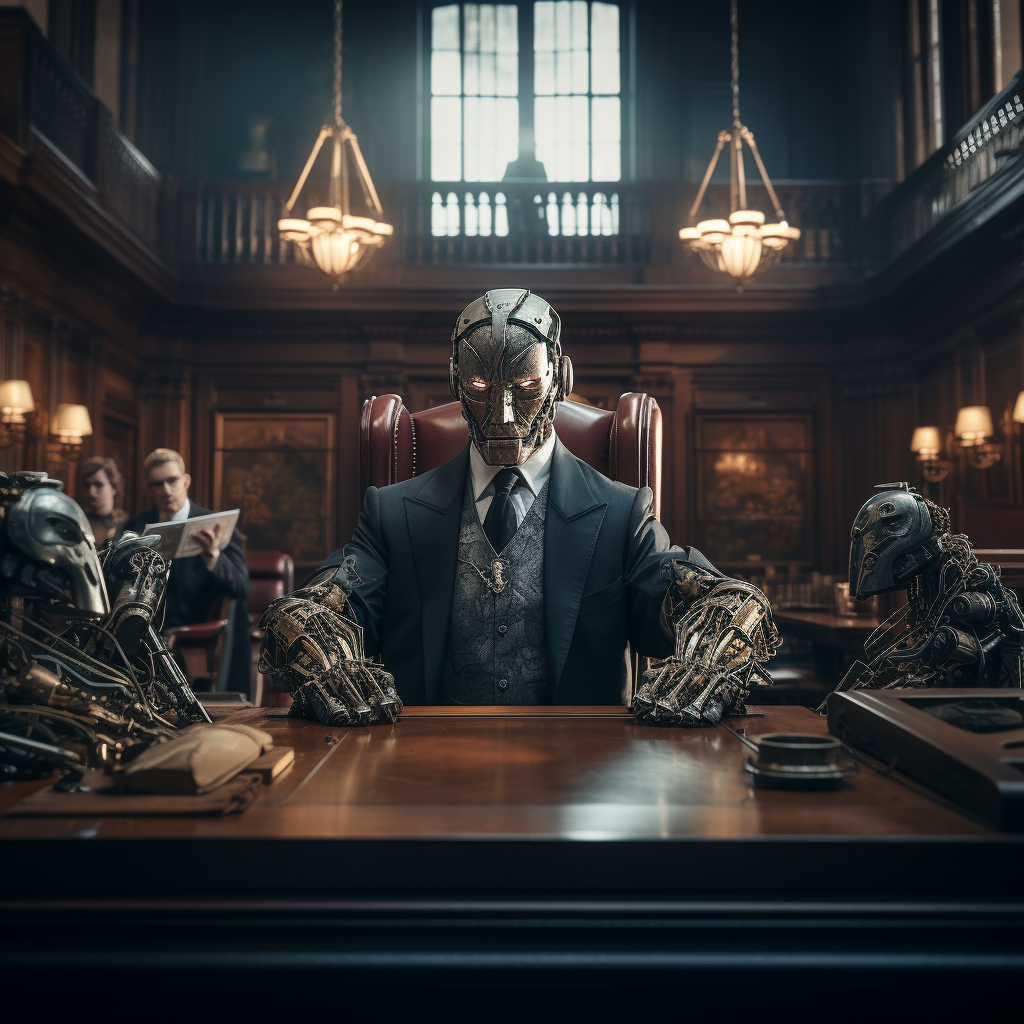
While exploring courses on LinkedIn, I came across a talk titled “Should machines be judges?” The topic intrigued me, and I genuinely wondered what the implications could be. Can a robot really conduct a judicial assessment? To what extent can it do so? Questions such as what it can evaluate and what it might overlook crossed my mind one after another. Consequently, I felt the need to do some research and learn more about the subject. I developed my writing based on the questions that genuinely sparked my curiosity.
The question of whether machines should be judges is a complex and multifaceted one, involving various ethical, practical, and societal considerations. Here are different angles to explore the positive and negative aspects of machines acting as judges, along with some differences between human and machine judges, and examples from around the world:
Positive Aspects:
Impartiality and Lack of Bias:
Machines can be programmed to make decisions based solely on the presented facts and legal principles, without being influenced by emotions, personal biases, or external pressures. This may lead to more impartial and fair judgments.
Consistency:
Machine judges can consistently apply the law without being affected by external factors, ensuring a more predictable legal system.
Efficiency:
Automated systems can process vast amounts of information quickly, potentially reducing the time and resources required for legal proceedings.
Access to Justice:
In regions with a shortage of human judges, machine judges could help expedite legal processes and provide access to justice for a larger population.
Negative Aspects:
Lack of Empathy and Understanding:
Machines lack the ability to understand the nuances of human emotions, which might be crucial in certain legal cases that require empathy and a deep understanding of human behavior.
Inflexibility:
Machines follow pre-programmed rules and algorithms, lacking the flexibility and adaptability that human judges possess. This may lead to inappropriate outcomes in cases where a more flexible approach is needed.
Ethical and Moral Dilemmas:
Decisions in legal matters often involve complex ethical and moral considerations, which may be challenging for machines to navigate without a human’s subjective judgment.
Accountability and Transparency:
The decision-making processes of machines can be opaque, making it difficult to hold them accountable for errors or biased outcomes. This lack of transparency may erode public trust in the legal system.
Differences Between Human and Machine Judges:
Subjectivity:
Human judges bring subjective experiences, intuition, and a deep understanding of societal norms to their decisions, whereas machines operate based on predefined algorithms.
Emotional Intelligence:
Human judges can assess and understand emotions, whereas machines lack emotional intelligence and may struggle to consider the emotional aspects of a case.
Adaptability:
Humans can adapt their decision-making based on the unique circumstances of a case, while machines follow rigid programming and may struggle with unprecedented situations.
Examples Worldwide:
Estonia:
Estonia has implemented an online platform called e-Justice, which utilizes automated solutions for certain legal processes, including small claims disputes.
China:
China has experimented with AI-powered “smart courts” to handle cases involving online transactions and intellectual property disputes.
United States:
Some U.S. states have implemented algorithms to assess the risk of recidivism in criminal cases, influencing decisions about bail and parole.
In conclusion, while machines may offer certain advantages in terms of impartiality and efficiency, the ethical and moral dimensions, as well as the potential lack of empathy and adaptability, raise significant concerns. Striking a balance between human judgment and technological assistance, ensuring transparency, and addressing potential biases are crucial considerations in the ongoing exploration of machines acting as judges.
For more information about this interesting topic please visit the following platforms:
- Academic Databases:
- News Websites:
- Legal Journals and Magazines:
- Online Legal Platforms:
- Academic Institutions and Think Tanks:
 Kika's world